
Product Center
-
Hydrological equipment monitoring station
-
Water Quality Monitor Sensor
-
Plant protection equipment
-
Food Testing Equipment
- Automatic Soil Moisture Monitors Multi-Parameter Soil Monitoring in Field Environments
- Soil pH tester enables both real-time, on-site soil pH testing and long-term, continuous monitoring
- Water Level Monitoring Device Utilizing Microwave Radar Technology for Simultaneous Water Level and Rainfall Data Acquisition
- Soil Test Kit Supports Rapid On-Site Nutrient Testing for Soil and Fertilizer
- What Parameters Do Online Water Quality Analyzers Monitor?
- Southern Rust Monitoring System: Predicting Maize Disease Outbreaks via Field Spore Data Collection
Shandong Fengtu IOT Technology Co., Ltd
Sales Manager:Ms. Emily Wang
Tel, Whatsapp:+86 15898932201
Email:info@fengtutec.com
Add:No. 155 Optoelectronic Industry Accelerator, Gaoxin District, Weifang, Shandong, China
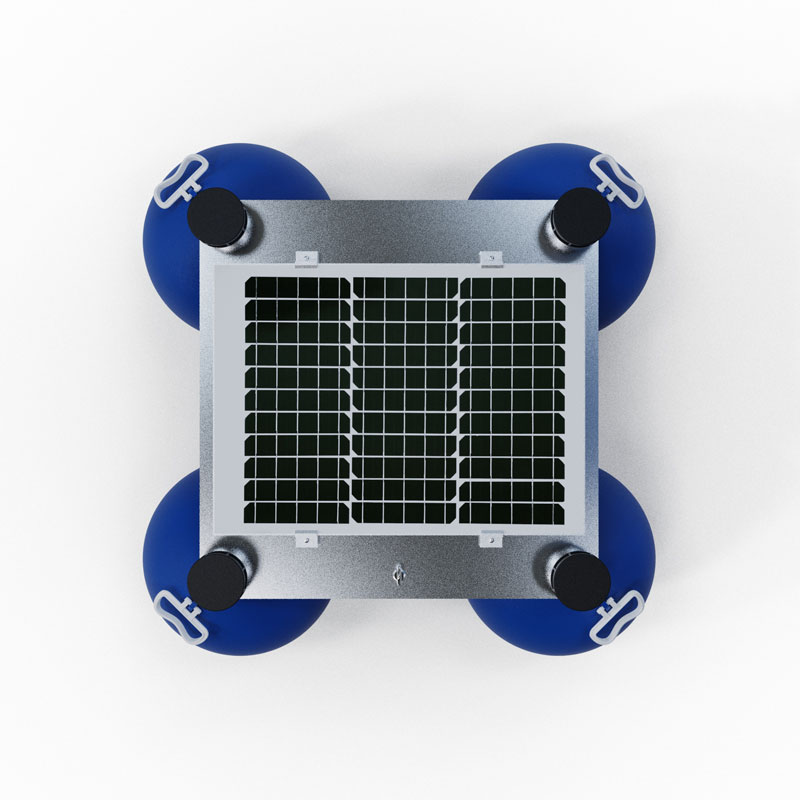
Buoy Water Monitoring
Model:FT-SFA
Brand:fengtu
 Get a Free Quote
Related products
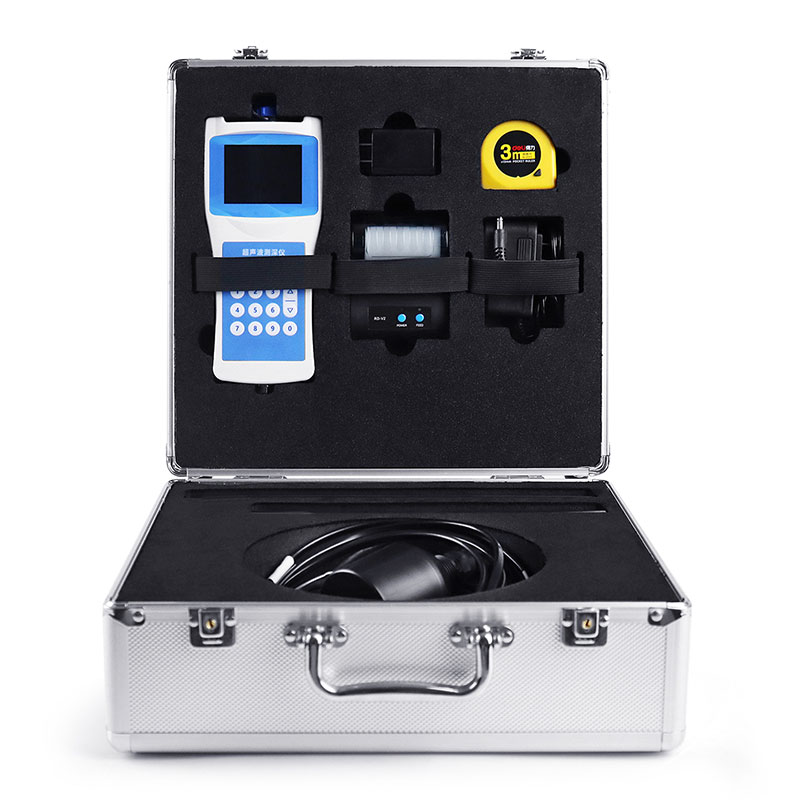
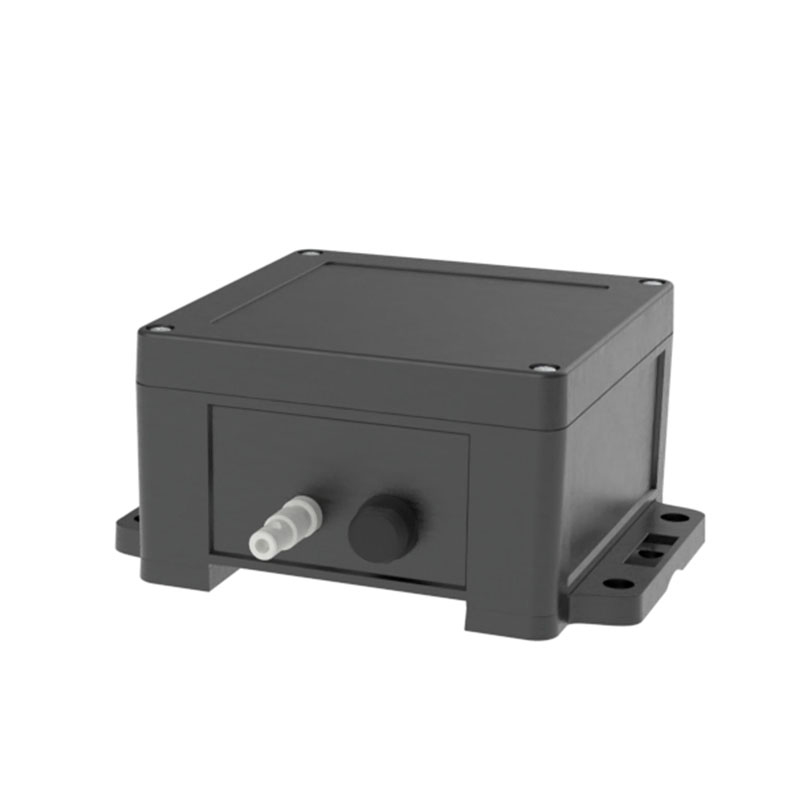
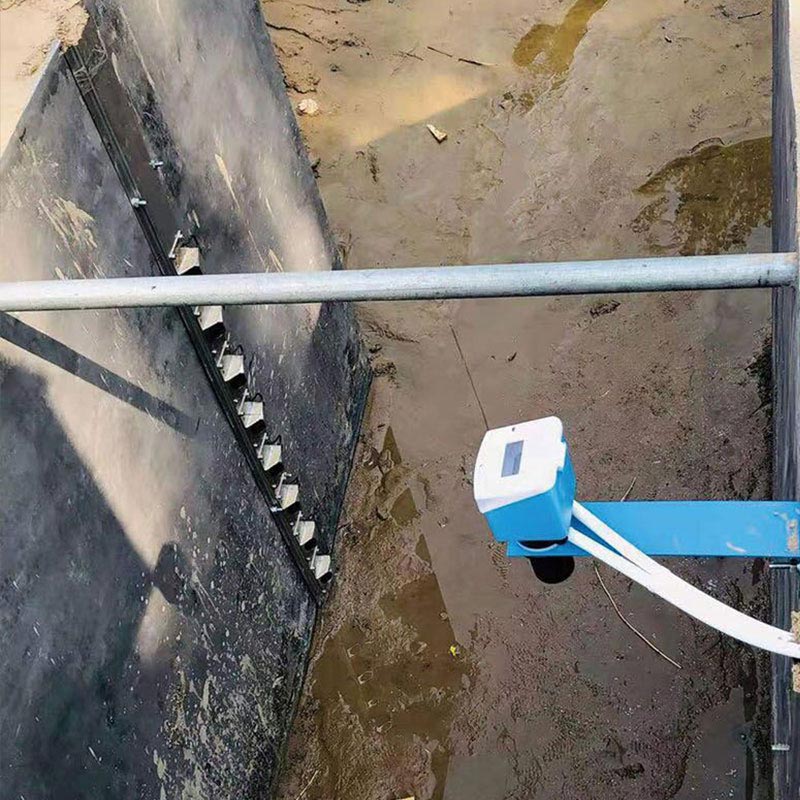
Product details
1.Introduction to Buoy Water Monitoring
1. Buoy Water Monitoring is to integrate each parameter sensor on the buoy and place it in the water body to be monitored. It can be installed and dropped without lifting.Buoy Water MonitoringSFA is an unattended data collection system that integrates data collection, storage, transmission and management. It is an automatic hydrological monitoring and reporting system for industrial and agricultural production, tourism, urban environmental monitoring, geological disasters, flood control, water supply scheduling, power station reservoir water management, etc. The powerful host computer software can remotely observe real-time water and rainfall information, and has database, report, download and other functions. Users can also use the well-functioning meteorological software to further process and analyze the recorded data.
2. The water quality monitoring system consists of six parts: water quality sensor, data acquisition instrument, communication system, power supply system, overall support, and water quality monitoring platform. It can simultaneously monitor water temperature, pH, dissolved oxygen, conductivity, ammonia nitrogen, turbidity, COD, and other water quality factors. The data acquisition instrument has data acquisition, real-time clock, data timing storage, parameter setting, and standard 2G/4G (GPRS) communication functions.
2. Buoy Water Monitoring Product Features
1. Easy to deploy: various types of probes are highly integrated and easy to install; free cloud platform services are provided, and the system can be quickly put online;
2. Easy maintenance: After the equipment is installed, it can work automatically without manual supervision. The normal operation of the equipment can also be ensured by remote monitoring;
3. Easy to expand: sensor probes all use a unified communication protocol, which can quickly connect to the original equipment and quickly expand monitoring parameters;
4. Low power consumption: The device can run for a long time in a low power consumption state, increasing the convenience of device use;
5. Real-time: The data monitored by the equipment is transmitted to the cloud platform in real time to improve the timeliness of environmental data feedback.
3. Buoy Water Monitoring Technical Parameters
1. Subject parameters
| product name | describe |
| Buoy Water Monitoring |
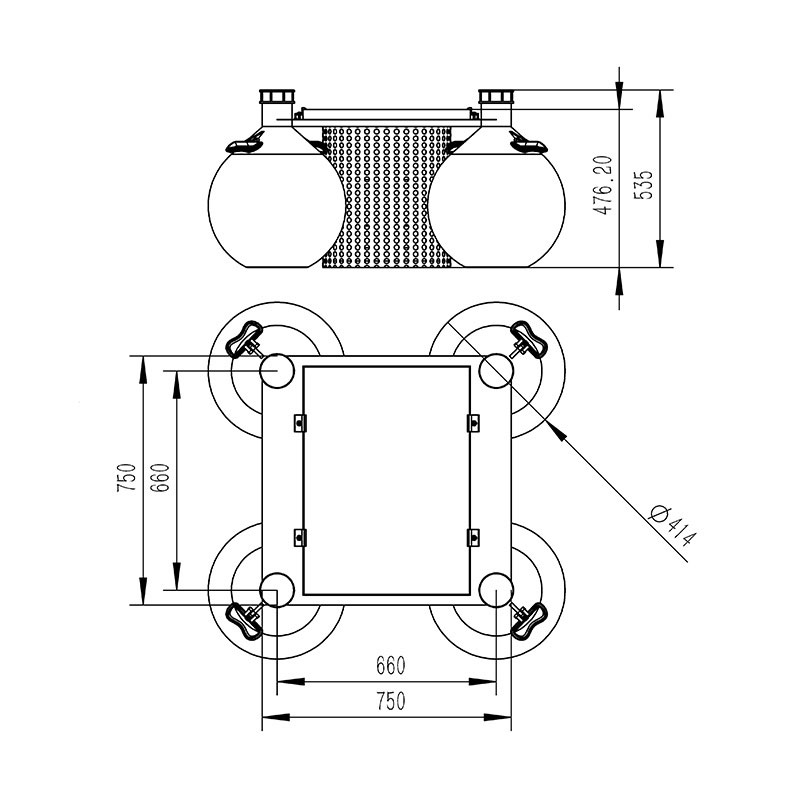
Real-time online monitoring of multiple parameters can be achieved. Battery charge monitoring can be realized. It can realize cloud platform data monitoring, data push, data storage and alarm functions; data wireless transmission function. The peak power consumption is 5W; the sensor power consumption is about 0.25W per sensor. Overall dimensions: 750mm*750mm*535mm. Float diameter 414mm Weight: 22kg |
| Collector data collection | Reliable operation, anti-interference, can integrate multiple RS485/MODBUS-RTU slave devices |
| Collector data output | 1 channel RS485/JSON protocol output |
| Battery | Lithium battery 12VDC, 20AH (default) |
| solar panel | 22.1V/50W (default) |
| Power supply capability | Customized selection; intermittent operation for more than 5 days on rainy days |
| Position indicator (optional) | Warning light;GPS positioning; |
| Monitoring Platform | Cloud platform; mobile phone/computer multi-terminal login |
| protecting mask | 304 stainless steel filter cartridge protective cover |
| Floating body | Diameter 414mm, spherical float * 4 engineering plastics |
2. Main parameters of optional sensors
| Model | Name | Measurement range | Principle | Measurement accuracy | Resolution | Is it standard equipment | Note |
| S1S | cod | 0~1000mg/L | UV254 absorption method | ±5%, ±0.3℃ | 0.1mg/L | cod turbidity integrated; brush self-cleaning, with temperature compensation | |
| Turbidity | 0~400NTU | Scattering light method | ±1%, ±0.3℃ | 0.1NTU | |||
| S2 | Water hardness | 0~1000.0mg/L | Contact method of electrode | Reading ±10%; ±0.3℃ | 0.1mg/L | ||
| S3 | pH | 0~14 (ph) | Electrochemistry (salt bridge) | ±0.1PH;±0.1℃ | 0.01 | With warm supplement | |
| pH | 0~14 (ph) | Electrochemistry (salt bridge) | ±0.1PH;±0.1℃ | 0.01 | |||
| S5 | Ammonium nitrogen | 0~1000mg/l | Ion selective electrode method | 10% of the reading, ±0.5℃ | 0.01mg | Ammonia nitrogen pH integrated; with temperature compensation | |
| pH | 0~14 (ph) | Electrochemistry (salt bridge) | ±0.1PH;±0.1℃ | 0.01 | |||
| S6 | ORP | -1500mv~1500mv | Electrochemistry (salt bridge) | ±6mv | 1mV | ||
| S7 | Electrical conductivity | 0~10000uS/cm | Contact method of electrode | ±1.5%; ±0.1°C | 1uS/cm | With warm supplement | |
| S7H | High range conductivity | 0~30000μS/cm | Contact method of electrode | ±1.5%; ±0.1°C | 1uS/cm | High range conductivity TDS salinity sensor; with temperature compensation | |
| TDS | 0-10000ppm | Contact method of electrode | ±1.5%; ±0.1°C | 1ppm | |||
| Salinity | 0-10000ppm | Contact method of electrode | ±1.5%; ±0.1°C | 1ppm | |||
| S8 | Dissolved oxygen | 0~20mg/L | Fluorescence lifetime method | ±2%, ±0.3℃ | 0.01mg/L | With warm supplement | |
| S9 | Turbidity | 0~1000NTU | Scattering light method | ±1%, ±0.3℃ | 0.1NTU | With warm supplement | |
| S10 | Suspended matter | 0~2000mg/L | Scattering light method | ±5% (depending on the homogeneity of the sludge) | 0.1mg/L | ||
| S11S | Sludge concentration | 0~20.000g/L | Scattering light method | ±5% (depending on the homogeneity of the sludge) | 0.001g/L | Brushed self-cleaning | |
| S15S | Chlorophyll | 0~400ug/L | Fluorescence method | R²>0.999 | 0.01ug/L | Self-cleaning with brush; with temperature compensation | |
| S16S | Cyanobacteria | 0~200.0Kcells/mL | Fluorescence method | R²>0.999 | 0.1Kcells/mL | Brushed self-cleaning | |
| S17S | Oil in water | 0~60ppm | Fluorescence method | 0.1ppm | 0.01ppm | Brushed self-cleaning | |
| S20 | Transparency | 50~1000mm | Scattering light method | ±5% (depending on the homogeneity of the sludge) | 1mm | With warm supplement | |
| S21 | Water temperature | −20℃~85℃ | High-precision digital sensor | ±0.1℃ | 0.1℃ |
We can customize appropriate testing solutions based on the actual situation of the customer and the technical indicators to be achieved.
Note: The sensor cannot be installed upside down or horizontally, but must be installed at an angle of at least 15 degrees.
The working environment of the above water quality sensors is 0-50℃, <0.3Mpa.
4. Buoy Water Monitoring Product Dimensions
5. Buoy Water Monitoring Equipment Installation Requirements
1. Stay away from high-power radio transmitters
2. Stay away from high-voltage transmission lines and microwave radio transmission channels
3. Try to be close to the data transmission network
4. Stay away from strong electromagnetic interference
This paper addresses:https://www.fengtusz.com/Water-Quality-Monitoring-Buoy/Buoy-Water-Monitoring.html
- Previous Article :IoT Water Buoy for Water Quality Monitoring
- Next Article:Water Quality Buoy
Related article
-
Urban drainage monitoring stations to prevent urban flooding
2024-04-15 -
Automatic soil moisture monitor Automatically Measures Soil Temperature, Humidity, and Conductivity
2026-05-20 -
FT-QJZ1 Tilt Acceleration Monitoring Station: Industrial-Grade 3-Axis Inclinometer
2025-10-22 -
What are crop growth monitoring instruments?
2024-04-30 -
Soil Moisture Monitoring Station: Driving Smart Soil Fertility Control
2025-03-05 -
Analysis of the Function and Advantage of Fengtu's Soil Moisture Monitoring Equipment in Drought Resistance
2024-11-22 -
Online Ammonia - Nitrogen Sensors: Pivotal Tools in Understanding, Measuring and Solving Ammonia - Nitrogen Issues
2025-02-18 -
What are the aquaculture water quality testers?
2024-02-22