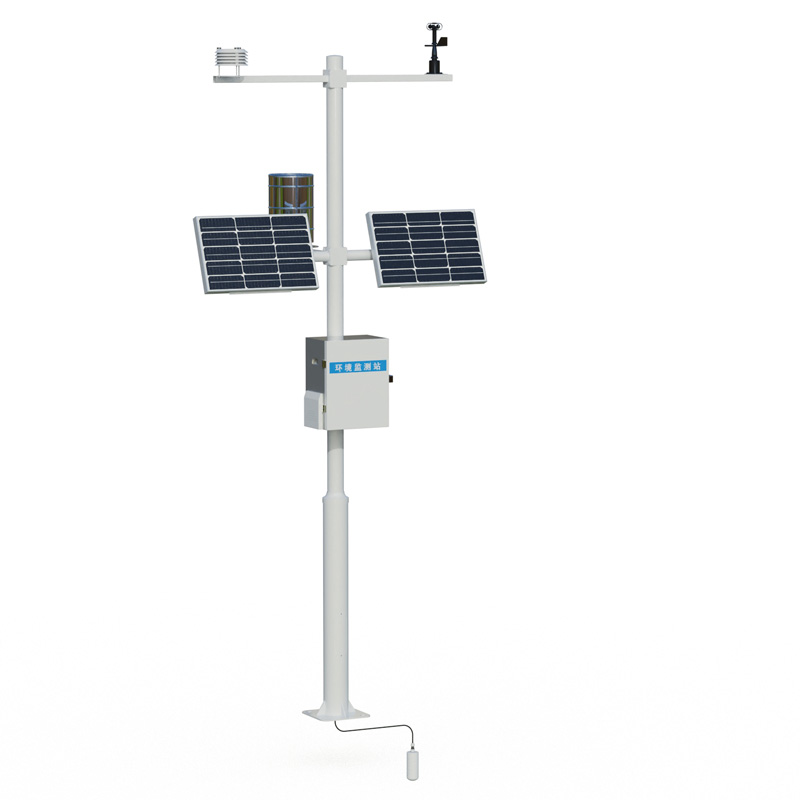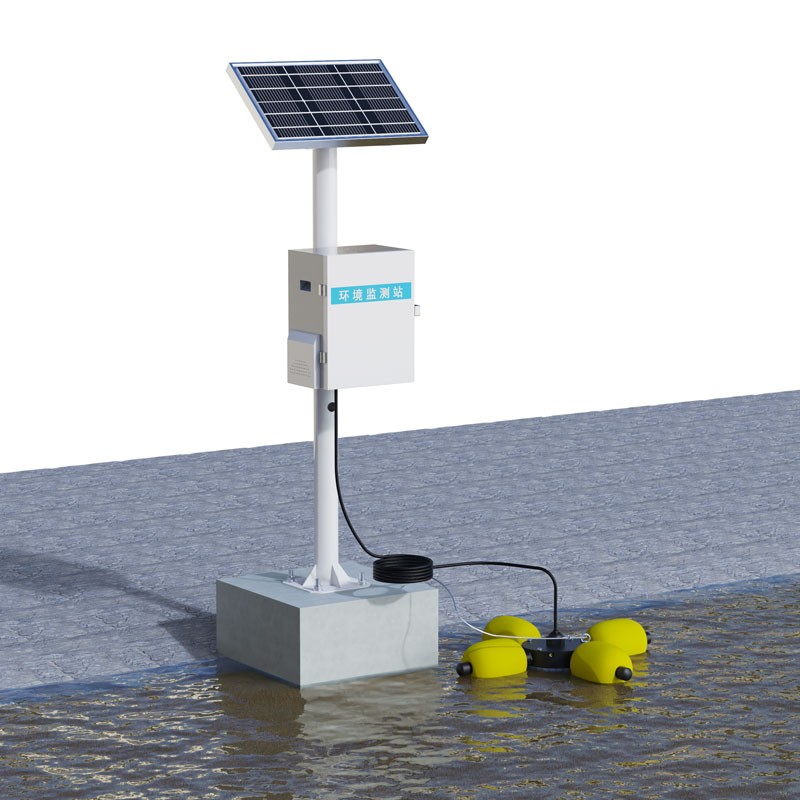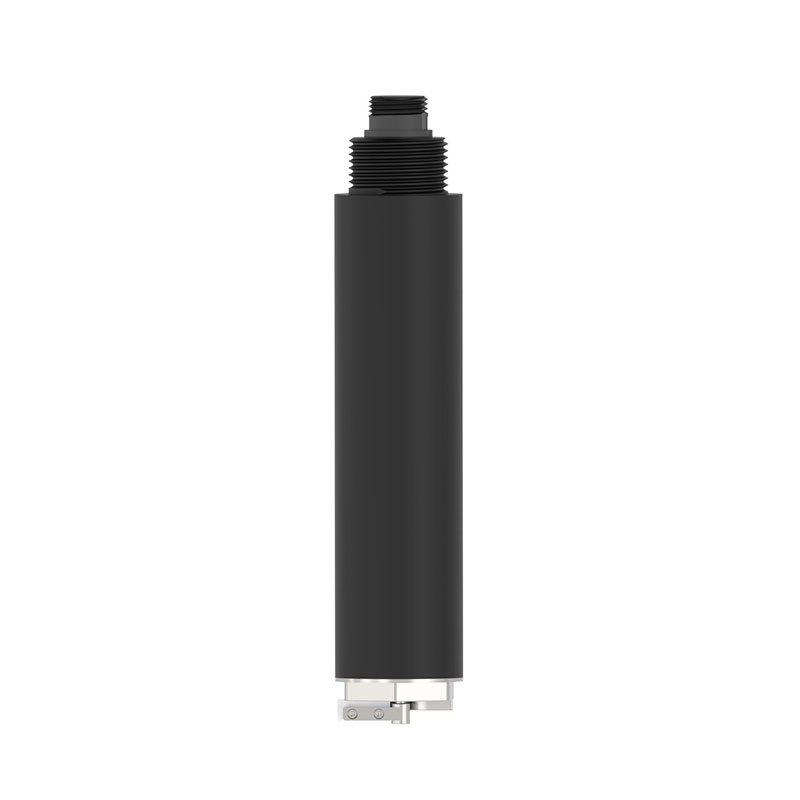
The turbidimeter designed for hydrological monitoring employs the 90° scattered light method to perform online measurements of water turbidity and temperature. With a measurement range of 0–1000 NTU, an accuracy of ±1%, and a resolution of 0.1 NTU, it is ideally suited for water quality monitoring in rivers and lakes. The device enables the rapid recording of turbidity fluctuations, thereby providing a crucial basis for pollution control and remediation efforts.
This specialized turbidimeter is dedicated to the online monitoring of water turbidity and temperature, capable of rapidly and accurately recording key water quality parameters. The instrument operates based on the scattered light principle: a beam of light emitted from a source passes through the water sample, and the turbidity value is determined by detecting the intensity of the light scattered at a 90° angle relative to the incident beam. The intensity of the scattered light is directly proportional to the concentration of suspended particles within the water; the higher the particle count, the stronger the scattered light signal and the higher the resulting turbidity value. The device offers a measurement range of 0 to 1000 NTU with an accuracy of ±1% and a resolution of 0.1 NTU; concurrently, it provides synchronous water temperature measurements with an accuracy of ±0.3°C.
In the context of water quality monitoring in natural bodies such as rivers and lakes, turbidity serves as a critical indicator of water clarity. Factors such as runoff caused by rainfall, disturbances from in-stream construction activities, algal blooms, and the discharge of industrial or domestic wastewater can all trigger abnormal increases in water turbidity. Elevated turbidity not only impairs the visual appearance of the water but also hinders light penetration, thereby negatively impacting the photosynthetic activity of aquatic plants and the habitat environment of aquatic organisms. Through continuous online monitoring, this turbidimeter provides real-time insights into water turbidity trends; furthermore, it triggers an alarm whenever turbidity levels exceed a pre-configured threshold, enabling water quality managers to promptly trace pollution sources and implement appropriate remediation measures.
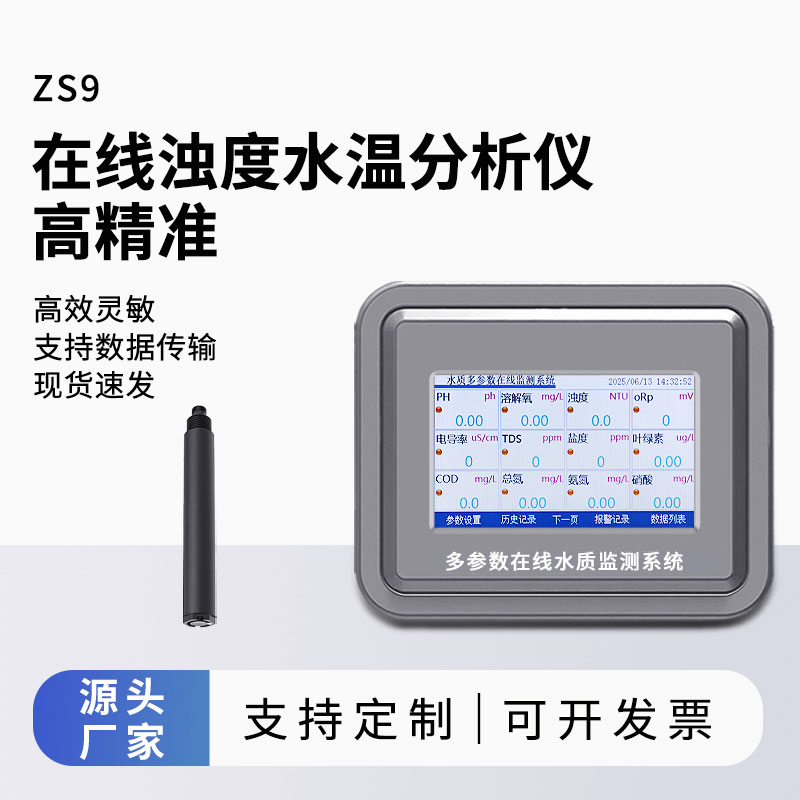
The turbidimeter for hydrological monitoring is suitable for a wide array of applications, including the monitoring of drinking water sources, wastewater treatment plants, industrial process water, and surface water environmental quality. The sensor utilizes optical scattering technology and features integrated automatic cleaning and bubble elimination functions, thereby reducing the frequency of manual maintenance and lowering on-site operational costs. Users may select between flow-through or submersible installation methods, depending on the specific requirements of their monitoring environment. The instrument features a 4–20 mA analog output and an RS485 digital communication interface, supporting remote data transmission and integration with computer-based monitoring systems, thereby meeting the requirements for establishing automated water quality monitoring networks. With its compact design and dustproof, waterproof enclosure, the device ensures long-term, stable operation in outdoor environments without the need for frequent calibration, making it ideally suited for deployment at unattended hydrological monitoring stations.
This paper addresses:https://www.fengtusz.com/technical/978.html