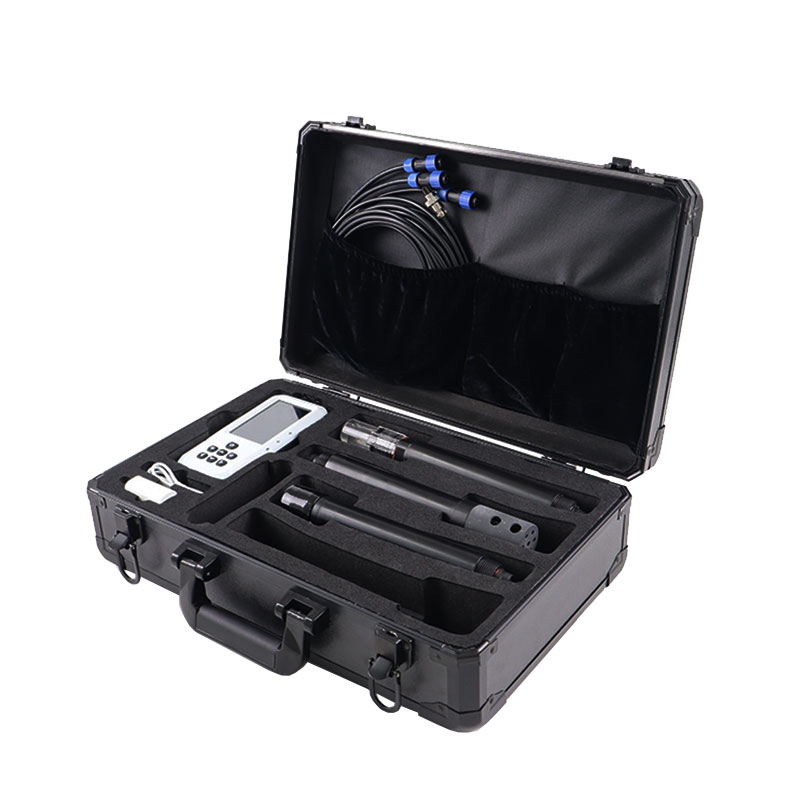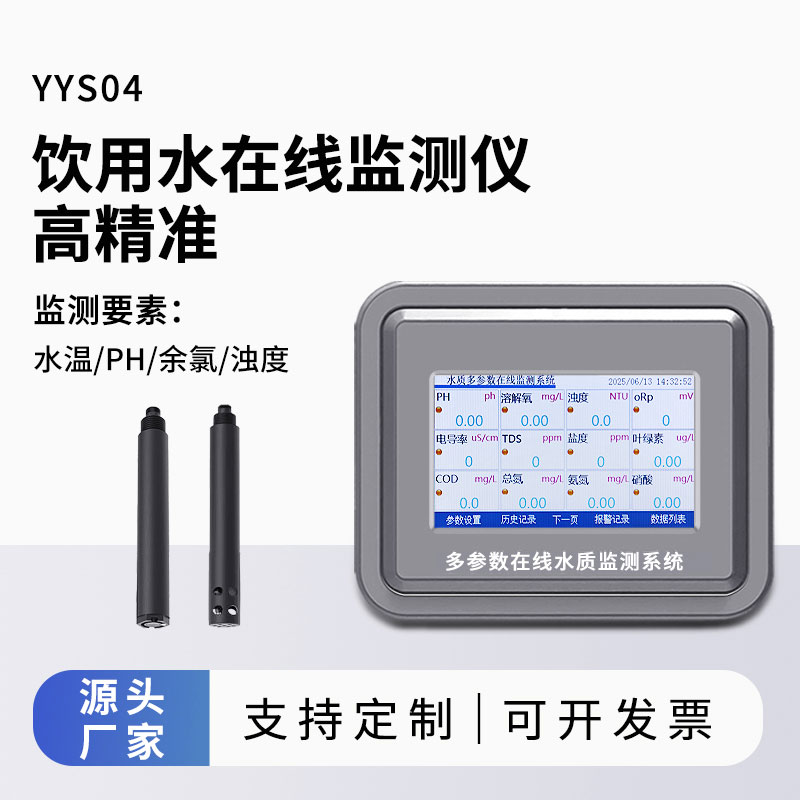
IoT Water Quality Monitoring Station integrates data acquisition, storage, transmission, and management. Powered by solar energy and utilizing wireless communication, it can be deployed in rivers, lakes, reservoirs, and coastal waters for real-time, in-situ monitoring. Equipped with sensors for parameters such as water temperature, conductivity, pH, dissolved oxygen, ammonia nitrogen, and turbidity, the system provides essential data support for automated hydrological monitoring and reporting.
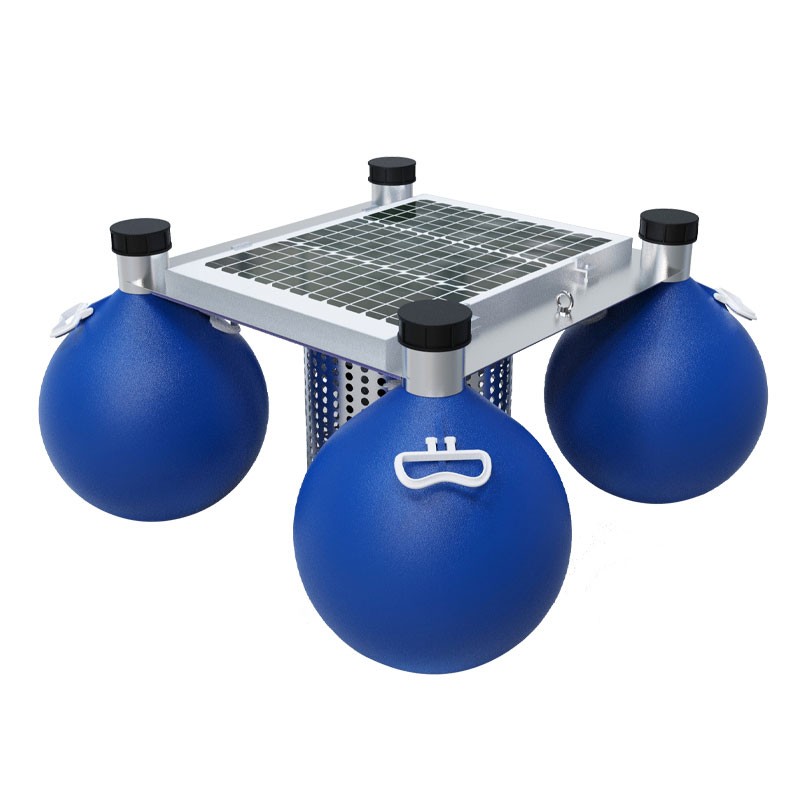
IoT Water Quality Monitoring Station is an automated monitoring system based on a buoy platform that integrates various water quality sensors and data transmission equipment. It can be deployed in surface waters—such as rivers, lakes, reservoirs, coastal areas, and aquaculture sites—for real-time, in-situ water quality monitoring. Featuring an integrated design that combines water quality sensing, data transmission, and solar power supply, the system operates stably over the long term without the need for on-site personnel.
IoT Water Quality Monitoring Station comprises six main components: water quality sensors (measuring water temperature, conductivity, pH, dissolved oxygen, ammonia nitrogen, and turbidity), a data logger, a communication system, a power supply system, a structural frame, and a water quality monitoring platform. It also supports the expansion of monitoring capabilities to include parameters such as COD, chlorophyll, and suspended solids. The data logger features data acquisition, a real-time clock, scheduled data storage, parameter configuration, and standard 2G/4G (GPRS) communication capabilities. The buoy body is constructed from high-molecular-weight polyethylene or stainless steel, offering high impact resistance, resistance to biofouling, and corrosion resistance. The power supply system consists of solar panels and high-capacity batteries, ensuring sufficient power for long-term field operations.
IoT Water Quality Monitoring Station continuously and automatically monitors changes in water quality, objectively records conditions, and promptly detects anomalies. This enables the forecasting of water pollution for the monitored area or downstream regions and facilitates the study of pollutant dispersion and natural purification processes. Monitoring data is transmitted efficiently and reliably via a dual-channel mode utilizing 4G/5G networks and BeiDou satellites, providing a solid foundation for pollution source tracing, water quality early warning, and ecological assessment. The system supports local data storage; data is automatically saved when the signal is poor and uploaded to the software platform once the signal is restored.
The powerful host-side software enables remote monitoring of real-time water and rainfall conditions and offers features such as database management, report generation, and data downloading. Users can also utilize meteorological software to further process and analyze the recorded data. Currently, IoT Water Quality Monitoring Station has been deployed in the coastal waters of Zhejiang and Qidong (Jiangsu), establishing a multi-parameter real-time monitoring network covering water quality, meteorology, and hydrology.
This paper addresses:https://www.fengtusz.com/industry/1041.html