Equipped with multiple sensors and AI recognition components, this equipment collects rodent image data continuously, remotely transmits monitoring information, analyzes rodent density and activity patterns, and supports routine rodent control in multiple locations.
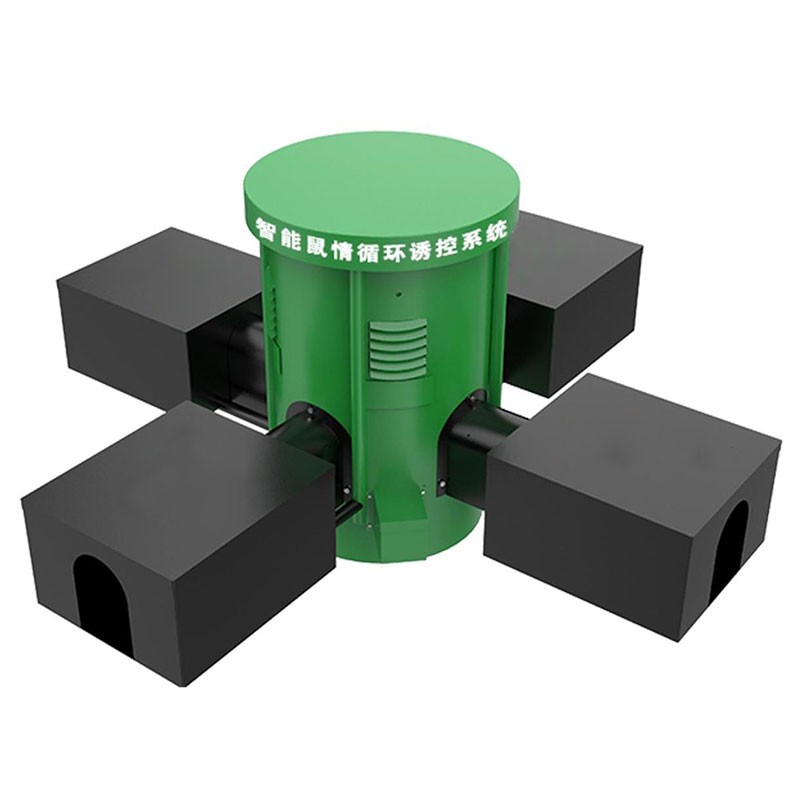
The intelligent rodent monitoring equipment establishes a complete intelligent remote rodent trapping and control system. Leveraging artificial intelligence algorithms, big data, and IoT technologies, it overcomes the shortcomings of traditional manual patrols and monitoring, adapting to various monitoring environments such as agriculture, forestry, animal husbandry, storage sites, and urban public areas. The entire hardware system comprises multiple functional modules including trapping channels, information collection, bait, central control, power supply, rodent extermination, rodent storage, and automatic release. It can switch between control, research, and cyclical trapping modes depending on the application, and its hardware structure is adaptable to long-term deployment in complex outdoor environments.
The intelligent rodent monitoring equipment features image acquisition components with customizable pixel specifications. Captured images are uniformly saved in JPEG format. The unidirectional channel structure enables omnidirectional trapping, and the trapping entrance and exit can autonomously open and close. The bait module supports intelligent, timed, and quantitative application. The device automatically resets after each application, ensuring the cyclical operation of the baiting and control process. The entire system utilizes photoelectric and CNC technology to automatically perform a series of operations, including attracting rodents, administering bait, monitoring status, and capturing images. All monitoring data is uploaded to a cloud platform in real time via an IoT link.
The intelligent rodent monitoring equipment's backend platform continuously receives monitoring data 24/7. AI recognition programs identify the species, number, and weight of rodents in the images, and compile visualized monitoring data such as rodent activity times and rhythms. The system accumulates long-term monitoring data on rodents in the region, performs statistical analysis and in-depth data mining, calculates local rodent density distribution, predicts rodent outbreak periods, and allows staff to plan control strategies based on objective monitoring data, abandoning the previous extensive management model that relied on experience for rodent control.
Traditional manual deployment of rodent traps requires a large workforce, and weather changes can easily interfere with the accuracy of monitoring results, making it difficult to capture the 24/7 activity dynamics of rodents. Intelligent rodent monitoring equipment enables unattended operation, fully records the dynamics of rodent populations, provides a reliable data foundation for ecological protection, food security, and urban vector control, and promotes the standardization and scientification of rodent control in various regions.
This paper addresses:https://www.fengtusz.com/company/1056.html