Radar Flow Meter is a fully automated telemetry device designed for open-channel flow measurement. Utilizing pulsed radar technology, the system simultaneously measures water levels and surface flow velocities in a non-contact manner, enabling real-time calculation of flow rates. Its performance remains unaffected by temperature, humidity, rainfall, floating debris, or turbid water conditions.
In applications ranging from river hydrology monitoring and irrigation district flow metering to urban drainage management, obtaining accurate open-channel flow data serves as the fundamental basis for effective water resource dispatch and management. However, traditional contact-based flow measurement devices require sensors to be submerged in the water body. In practical operation, these devices frequently encounter issues such as entanglement by aquatic vegetation, sediment accumulation, and structural impact from floodwaters during peak seasons; consequently, they demand frequent maintenance, and their failure rates are a significant concern. Radar Flow Meter offers a non-contact alternative to address these challenges. The system is mounted overhead—typically via a support pole—positioned directly above a regular cross-section of an open channel or river. By remaining entirely above the water surface, it fundamentally eliminates the adverse effects that debris entanglement and corrosion typically have on measurement accuracy, thereby achieving truly all-weather, unattended, and automated monitoring capabilities.
The operational principle of Radar Flow Meter is rooted in pulsed radar technology. The system emits a downward-directed radar beam; upon striking the water surface, the beam generates a return echo. By analyzing the frequency shift—a phenomenon governed by the Doppler effect—the system accurately calculates the surface flow velocity of the water body. Simultaneously, an integrated radar water-level sensor emits a downward-directed Frequency Modulated Continuous Wave (FMCW); by measuring the frequency difference between the transmitted and received signals, the sensor precisely captures the water depth at the specific cross-section. Once the telemetry terminal receives both the flow velocity and water-level data from the field, it integrates these inputs with the pre-configured geometric parameters of the specific channel cross-section to automatically calculate the instantaneous flow rate at that precise moment using the velocity-area method formula. The entire device integrates flow velocity monitoring, water-level measurement, and digital flow rate computation into a single, unified host unit.
The system's adaptability allows it to effectively cover the vast majority of open-channel flow measurement scenarios. Since radar waves are insensitive to sediment particles and suspended solids within the water, measurement accuracy remains uncompromised regardless of water clarity or quality. The device features a fully sealed enclosure structure with an ingress protection rating exceeding IP65; it is engineered with robust resistance to salt spray and corrosion, ensuring continuous, reliable operation even under harsh climatic conditions involving high temperatures, high humidity, rain, and snow. The device requires no pre-embedding or installation of any flow-obstructing components within the channel; consequently, it exerts no additional artificial influence on the channel's natural flow dynamics, ensuring that the measurement process remains natural and free of extraneous errors. In its two core application scenarios—routine water distribution metering in irrigation districts and comparative flood routing analysis in river channels—this system is capable of operating stably over extended periods while maintaining a high frequency of data output.
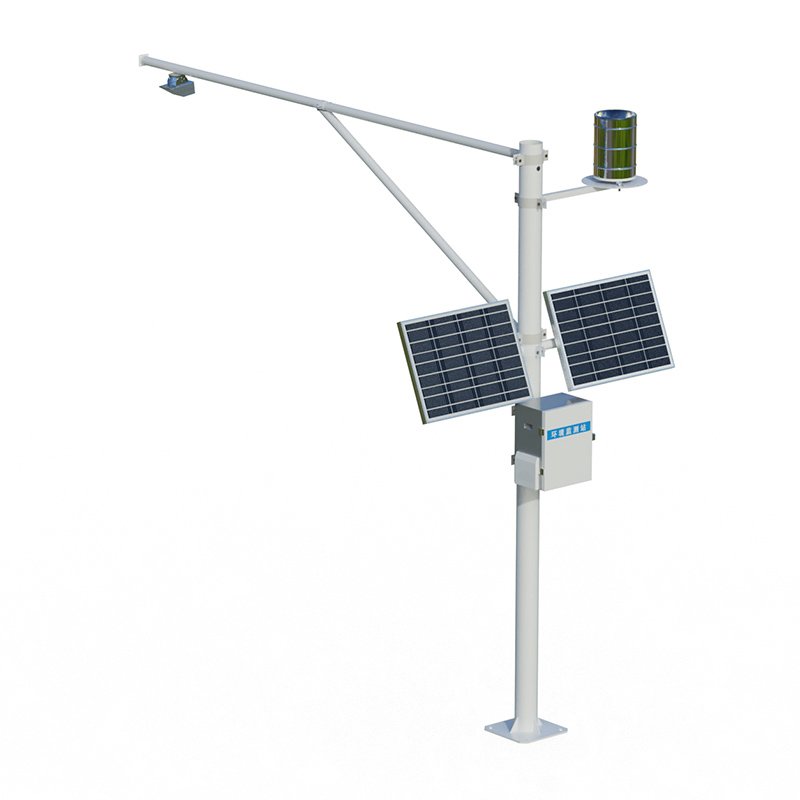
In practical engineering deployments, the Radar Flow Meter system typically comprises five main components: an integrated radar unit for water level, surface velocity, and flow measurement; a Remote Terminal Unit (RTU); a solar power supply system; a mounting pole and bracket assembly; and a lightning protection and grounding system. The combination of solar panels and storage batteries powers the system, eliminating the need for a connection to the municipal power grid and enabling uninterrupted, year-round operation even in remote, off-grid field locations. The RTU supports various wireless transmission protocols—including 4G and BeiDou—allowing for the remote uploading of real-time flow velocity, water level, and flow rate data to a centralized hydrological monitoring platform. Furthermore, it features data caching and "resume-on-break" transmission capabilities, ensuring that no data is lost even under unstable network conditions. Through this platform, irrigation management authorities can monitor the real-time flow rates at various channel inlets, thereby providing a precise data foundation for scientific irrigation practices and water-saving dispatching strategies.
This paper addresses:https://www.fengtusz.com/company/976.html