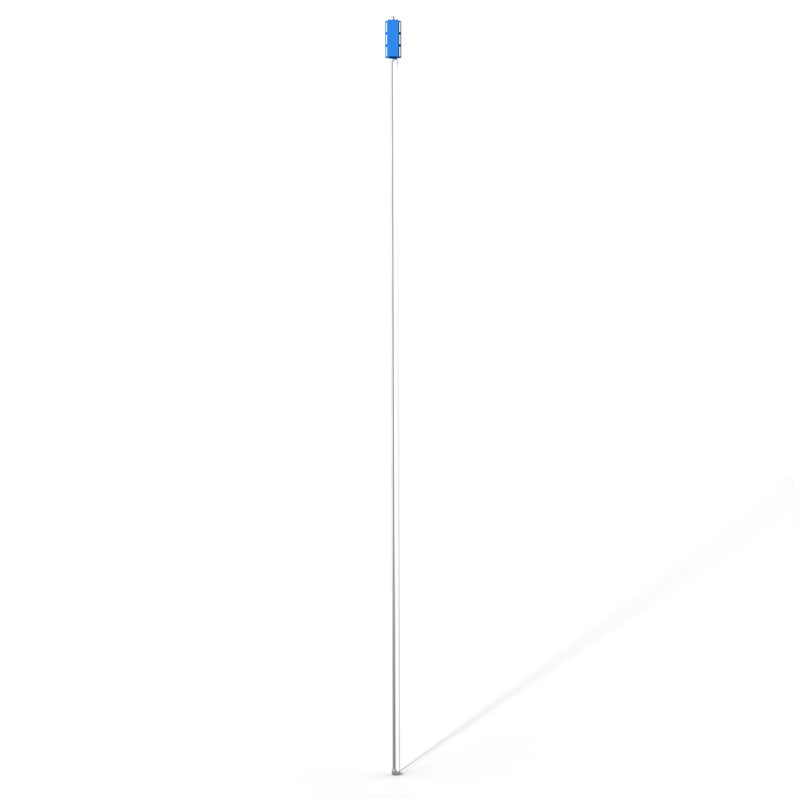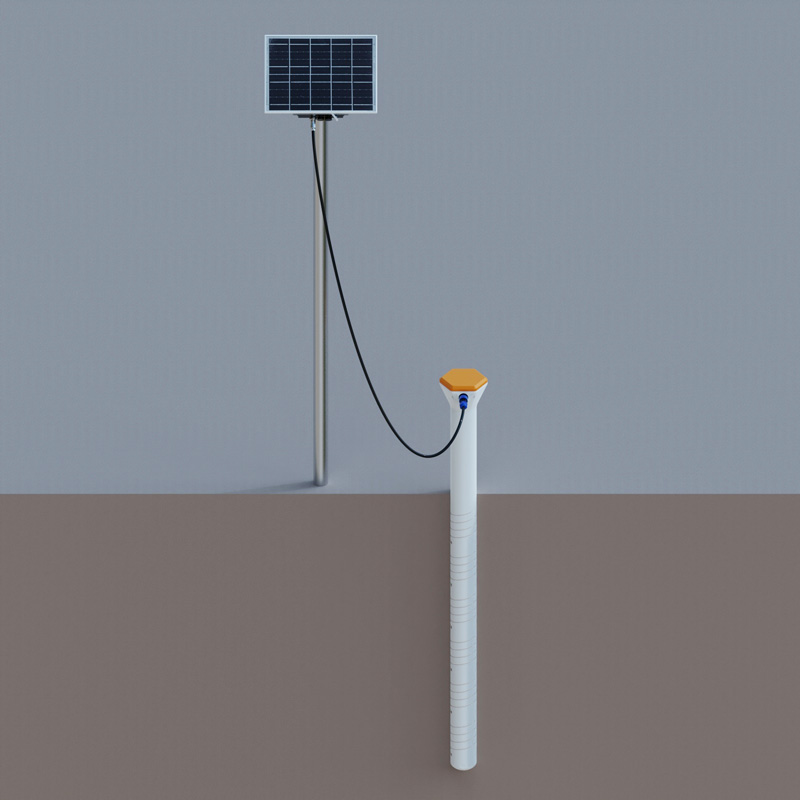
The IoT system for lake water monitoring consists of six key components: water quality sensors, a data acquisition unit, a communication system, a power supply system, a structural mounting frame, and a water quality monitoring platform. It is capable of measuring hydrological, water quality, and meteorological parameters within lake basins in real time, thereby enabling intelligent, round-the-clock supervision of the aquatic environment across rivers, lakes, and reservoirs.
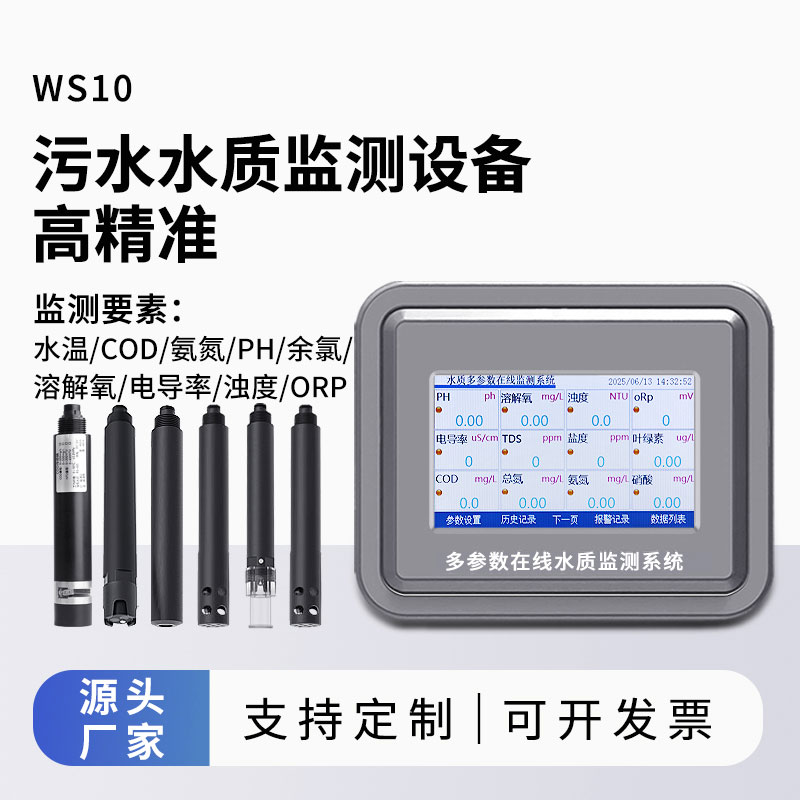
This IoT system for lake water monitoring is an intelligent management solution that integrates Internet of Things (IoT), big data, and mobile internet technologies. It is specifically designed for the real-time environmental monitoring of various water bodies, including lakes, reservoirs, and river basins. The system comprises six main parts: water quality sensors, a data acquisition unit, a communication system, a power supply system, a structural mounting frame, and a water quality monitoring platform. The water quality sensors monitor fundamental parameters—such as water temperature, conductivity, pH levels, dissolved oxygen, ammonia nitrogen, and turbidity—while also supporting the expansion of monitoring capabilities to include additional water quality indicators, such as chlorophyll and COD, thereby meeting the diverse monitoring requirements of different aquatic environments.
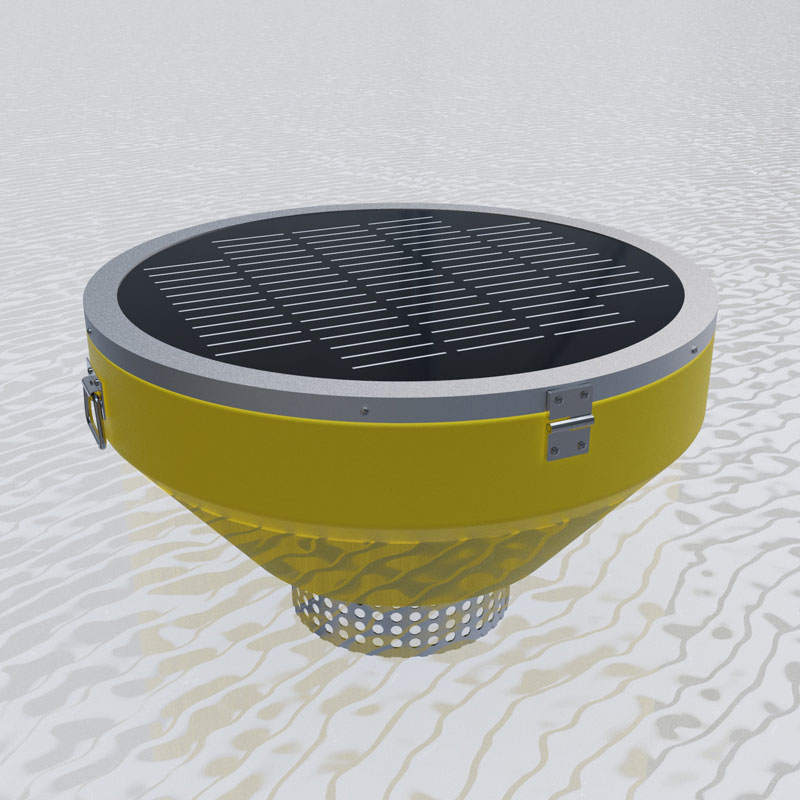
The data acquisition unit serves as the system's core control hub, featuring capabilities for data collection, real-time clock synchronization, scheduled data storage, parameter configuration, and standard 2G/4G communication. Utilizing wireless communication technologies such as 4G and GPRS, the acquisition unit uploads sensor-collected data to a cloud-based platform in real time, facilitating remote monitoring and early warning alerts. The power supply system employs a hybrid solution combining solar panels with high-capacity storage batteries; this configuration ensures the equipment's long-term, stable operation in remote field environments lacking access to grid electricity, thereby enabling fully unattended operation. The water quality monitoring platform provides functions for data reception, storage, visualization, and anomaly alerting, allowing administrators to access and review water quality status updates at any time via computer or mobile device.
In practical application, the IoT system for lake water monitoring has been successfully deployed across numerous lake basins throughout China. For instance, in the Dali Prefecture of Yunnan Province, the "Digital Erhai" Supervision and Service Platform was established to support the objectives of improving water quality in Lake Erhai. Powered by technologies such as IoT and artificial intelligence, this platform has constructed an intelligent sensing network encompassing 428 monitoring stations that cover a comprehensive range of parameters, including water quality, hydrology, and meteorology. Hefei City has integrated various types of monitoring data through the "Digital Chaohu" platform, establishing a comprehensive, multi-dimensional monitoring system that spans satellite, video, water quality, and water quantity monitoring capabilities. To date, the system has connected 333 water quality stations, 222 meteorological stations, and 997 hydrological stations, aggregating a total of 519 million data records. Shiyan City has leveraged technologies such as 5G, cloud computing, big data, and artificial intelligence to construct an intelligent water quality monitoring system, thereby creating a unified, city-wide network dedicated to water conservation and protection.
The value of this IoT-based water body monitoring system lies in its transformation of the traditional paradigm—which relied on manual sampling and laboratory analysis—into a system of real-time, online monitoring. This shift elevates water quality oversight from retrospective testing to continuous real-time surveillance and proactive early warning, effectively resolving the core pain points associated with traditional monitoring methods: data lag, limited coverage, and high labor costs.
This paper addresses:https://www.fengtusz.com/industry/968.html