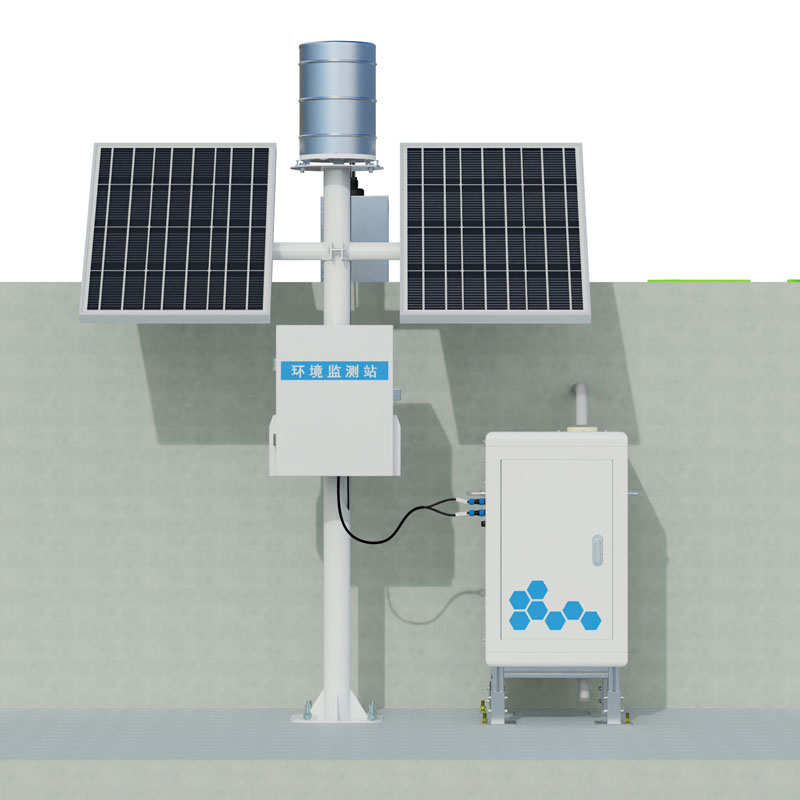
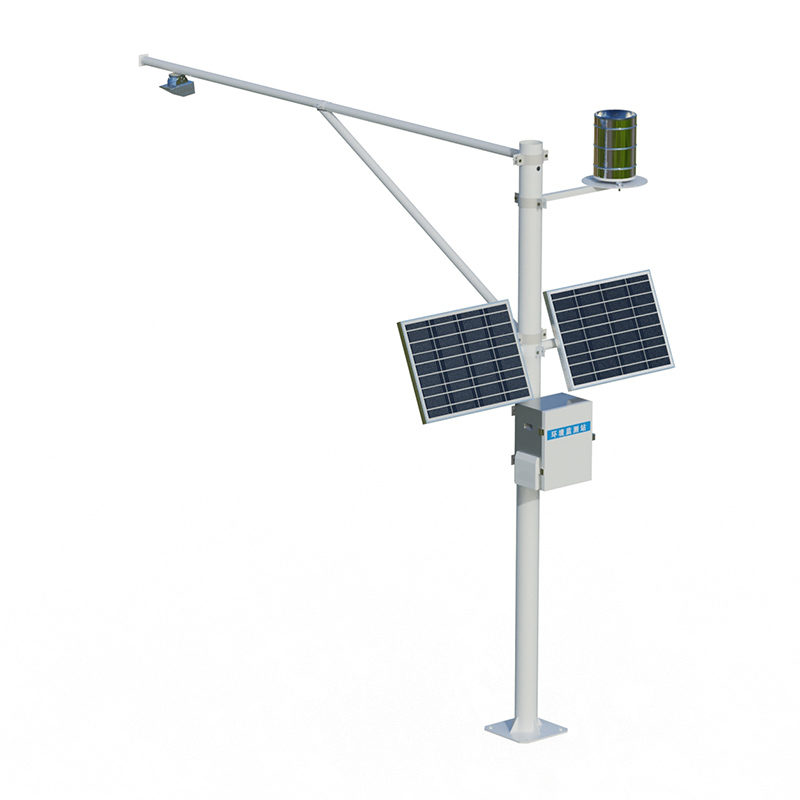
River Flow Monitoring based on microwave radar technology, can simultaneously measure water level, flow velocity, flow rate, and rainfall. It is suitable for scenarios such as rivers, irrigation canals, and flood control early warning, providing real-time data support for water resource management and flood control decision-making.
River Flow Monitoring primarily employs K-band planar radar technology to measure the flow velocity and water level on the water surface in a non-contact manner. The sensor is suspended above the river or canal, emitting radar waves and receiving the reflected signals from the water surface. The Doppler frequency shift principle is used to calculate the surface flow velocity. Water level measurement is based on the frequency-modulated continuous wave ranging principle. After the radar wave reflects back from the water surface, the distance from the sensor to the water surface is calculated based on the frequency difference between the transmitted and received signals. This distance, combined with the sensor's installation height, is then used to calculate the actual water level. The system has a built-in software algorithm that converts the measured surface flow velocity into the cross-sectional average flow velocity using a hydraulic model. This average velocity is then multiplied by the water level and the cross-sectional area to obtain the real-time cross-sectional flow rate. The measurement process is unaffected by temperature, sediment, water pollutants, and floating debris, enabling it to adapt to complex field hydrological environments.
The water level measurement range of River Flow Monitoring is 0.1 to 40 meters, with a distance measurement accuracy of ±5 mm and a resolution of 1 mm. The flow velocity measurement range is 0.15 to 15 meters per second, with a velocity measurement accuracy of ±2% and a velocity resolution of 0.01 meters per second. Rainfall monitoring covers a range of 0 to 4 millimeters per minute, with a measurement accuracy of ±0.2 mm and a resolution of 0.2 mm. Data acquisition intervals can be set arbitrarily from 1 to 5000 minutes. The system has an IP68 field protection rating and an operating temperature range of -35°C to 60°C. Powered by a combination of solar panels and batteries, the system can operate unattended for extended periods in remote, uninhabited areas.
In practical applications, River Flow Monitoring is widely installed in rivers, lakes, reservoir gates, irrigation canals, and underground drainage networks. Data collected by sensors is uploaded to a cloud platform in real time via a wireless network, allowing managers to remotely view real-time data and historical change curves via computer or mobile phone. When water level or flow exceeds a preset threshold, the system automatically triggers an SMS alarm, notifying managers to take timely action. This equipment plays a crucial role in flood prevention and early warning, enabling early detection of upstream water inflow changes and providing decision-making support for downstream flood control scheduling. In urban drainage management, the system can monitor the water level and flow of stormwater and sewage pipe networks in real time, providing data support for urban flooding prevention. Regarding irrigation district water resource scheduling, continuous water level and flow data helps optimize irrigation water allocation plans and improve water resource utilization efficiency.
This paper addresses:https://www.fengtusz.com/industry/991.html