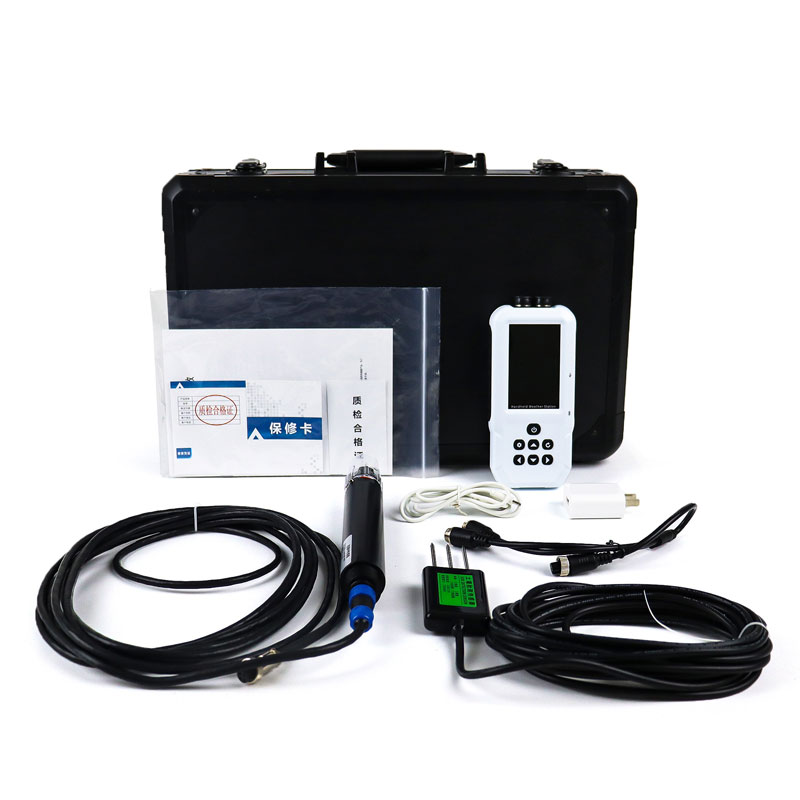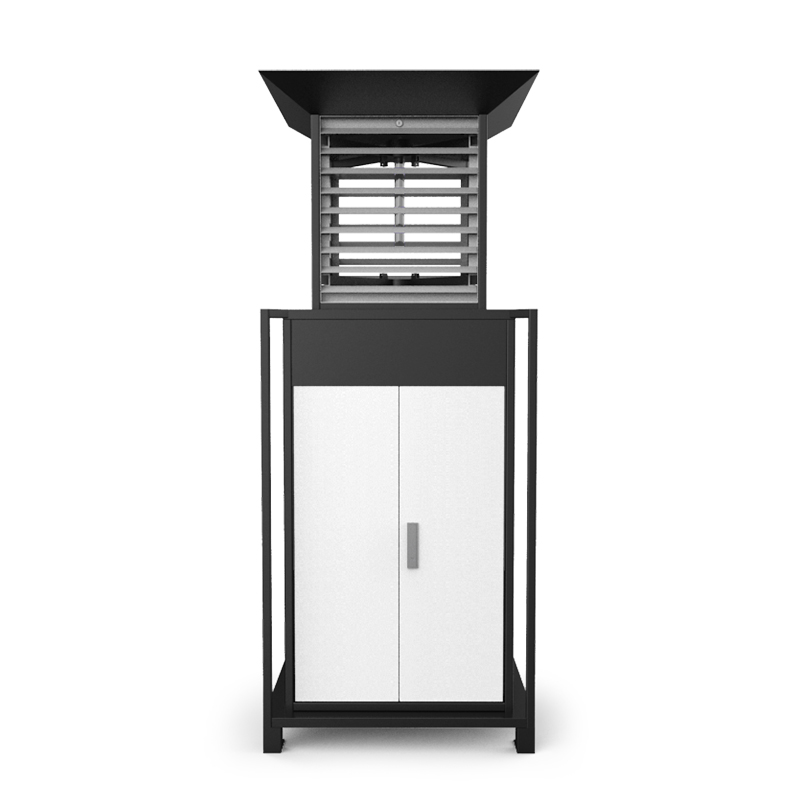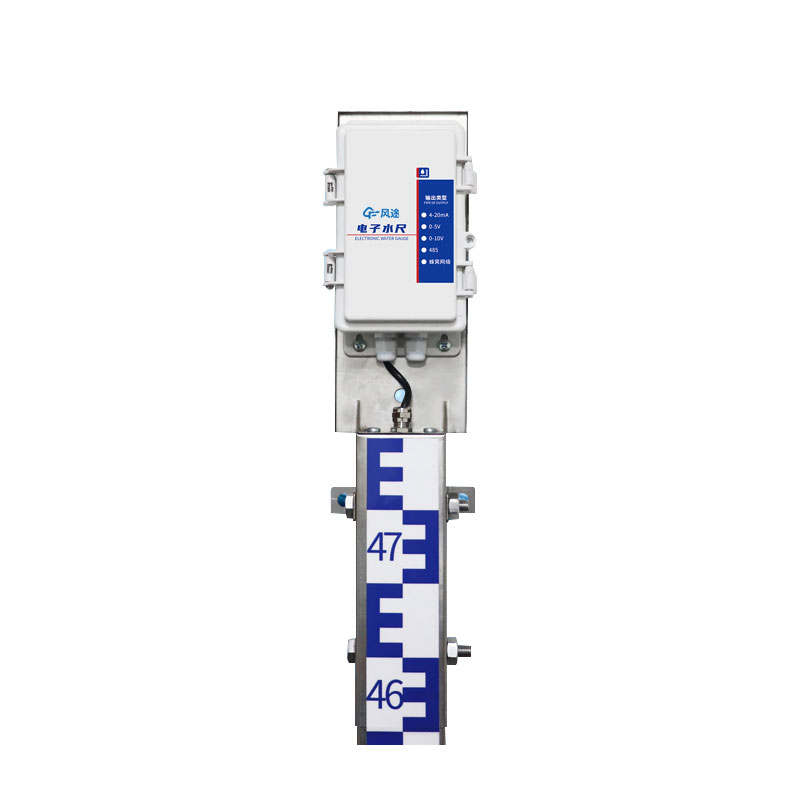
This equipment integrates data acquisition, storage, transmission, and management, and consists of six parts: water quality sensors, a data acquisition instrument, a communication system, a power supply system, a support frame, and a monitoring platform. It can be deployed without hoisting and is suitable for real-time online monitoring of unattended water bodies in the field.
The floating island-type solar-powered water quality monitoring equipment is an unattended water quality acquisition system that integrates data acquisition, storage, transmission, and management. The equipment consists of six parts: water quality sensors (water temperature, conductivity, pH, dissolved oxygen, ammonia nitrogen, turbidity), a data acquisition instrument, a communication system, a power supply system, an overall support frame, and a water quality monitoring platform. It can also be expanded to include multiple water quality elements such as COD, chlorophyll, and suspended solids according to user needs. The water quality monitoring buoy uses a floating body as a carrier, integrating digital sensors, solar power supply, data acquisition, and transmission, enabling real-time, in-situ monitoring of water quality in remote rivers and lakes and providing early warnings.
The data acquisition unit features data acquisition, a real-time clock, timed data storage, parameter setting, and standard 2G/4G (GPRS) communication capabilities. Utilizing modern wireless communication technology, the equipment enables data transmission and remote control between the buoy system and the monitoring platform, achieving online automatic monitoring and early warning of water quality in rivers, reservoirs, lakes, and aquaculture. The powerful host computer software allows for remote observation of real-time water and rainfall information, and includes database, reporting, and download functions. Users can also further process and analyze the recorded data using this software.
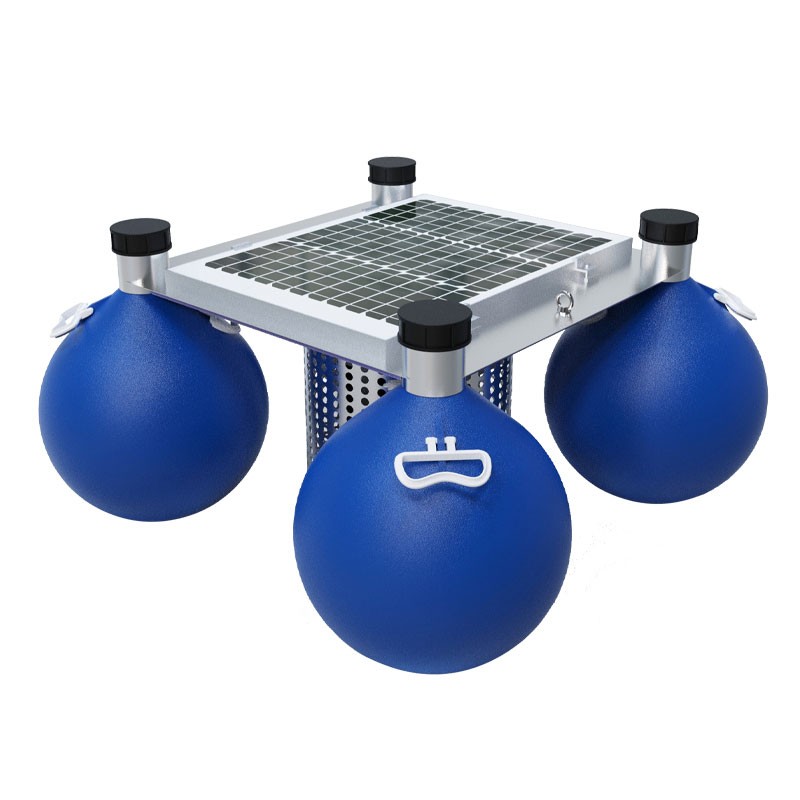
Regarding installation and deployment, the floating island-type solar-powered water quality monitoring equipment can be deployed without hoisting, making it suitable for real-time online monitoring in unattended water areas. The equipment is powered by solar energy, which is the most feasible solution given the buoy monitoring equipment's distance from land and lack of surface power supply. The floating island's dimensions are 750mm*750mm*535mm. The float diameter is 414mm, and the weight is 22kg. It is made of high-polymer material, possessing excellent impact resistance and corrosion resistance. The power supply system can be equipped with a 50W solar panel and a 20AH battery, effectively ensuring continuous operation even during prolonged cloudy or rainy weather. The equipment features an anti-tipping design based on the principle of a self-righting toy, with a lowered center of gravity to prevent tipping.
In terms of application scenarios, floating island-type solar-powered water quality monitoring equipment is widely used for real-time monitoring of surface water bodies such as rivers, lakes, reservoirs, nearshore areas, and aquaculture areas. The equipment can objectively record water quality conditions using solar power, electrochemical sensors, automatic data acquisition, and IoT technology, even without an external power source, thus preventing water pollution accidents. It is simple to install, easy to debug, and convenient to maintain, requiring no land acquisition for power supply. Its excellent environmental adaptability makes it well-suited for deployment in urban rivers, industrial waterways, and water intake tunnels.
This paper addresses:https://www.fengtusz.com/technical/1033.html