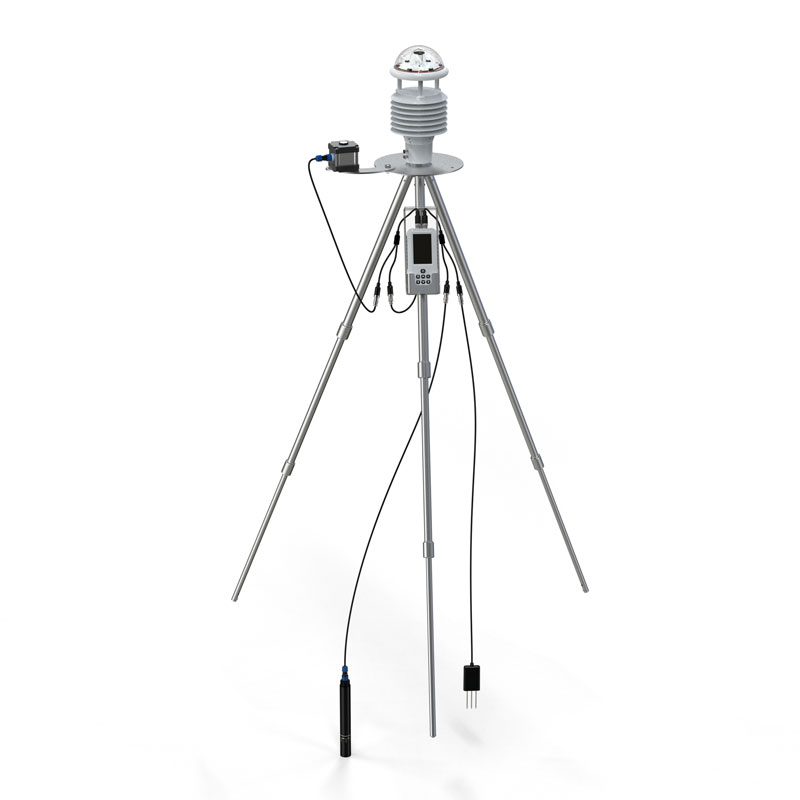
This equipment integrates tubular soil moisture monitors, insect monitoring lamps, weather stations, and video surveillance terminals. Through AI-powered automatic pest identification, real-time meteorological and soil moisture analysis, and remote viewing of seedling conditions, it provides 24/7 monitoring of the crop growth environment and is widely deployed in high-standard farmland and agricultural demonstration parks.
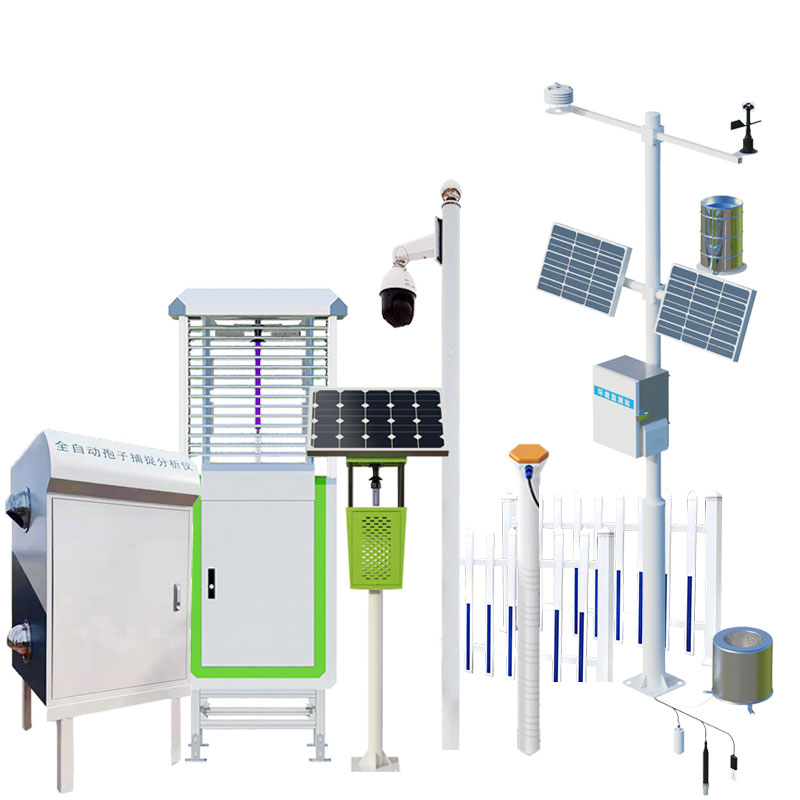
This soil moisture, meteorological, insect, and seedling condition data acquisition equipment is an integrated system designed to meet the monitoring needs of these four agricultural conditions. The system consists of tubular soil moisture monitors, insect monitoring lamps, weather stations, video surveillance, fencing, and a cloud platform. It can provide real-time, 24/7 dynamic monitoring of soil moisture and temperature, air temperature and humidity, wind speed and direction, pest species and numbers, and crop growth, ensuring that the crop production environment meets agricultural standardization requirements.
In terms of pest monitoring, soil moisture, meteorological, pest, and seedling data acquisition equipment utilizes intelligent pest monitoring lamps for pollution-free insect trapping and killing. Far-infrared heating devices attract pests, and high-definition cameras capture insect images. AI algorithms automatically identify and classify insect species, supporting remote real-time viewing of pest conditions, pest species identification, regional pest statistics, and pest trend analysis, providing data for precise pesticide application. Soil moisture monitoring employs tubular sensors to penetrate and probe the soil environment, remotely acquiring multi-layered dynamic observation data on soil temperature, humidity, moisture, pH, and salinity. Data is connected to a cloud platform for online analysis of historical soil moisture. The meteorological station integrates multiple sensors for wind direction and speed, air temperature and humidity, rainfall, light intensity, and atmospheric pressure, enabling 24-hour continuous collection of field meteorological elements and historical data retrospective analysis. Seedling monitoring uses video cameras to form a visual monitoring system, allowing managers to remotely view crop growth in real-time without repeated field inspections.
Data collected by soil moisture, meteorological, insect, and seedling conditions data acquisition equipment is uploaded to an agricultural four-condition monitoring platform via 4G, Ethernet, and other communication methods. This platform supports large-screen real-time visualization monitoring, simultaneously displaying soil moisture, insect statistics, meteorological elements, and video monitoring footage. Users can remotely view all environmental parameters via PC or mobile phone. The system has a built-in intelligent alarm function; once the monitored data exceeds the threshold, it will automatically push warning information to management personnel. Currently, this equipment has been deployed in high-standard farmland projects in Gangbu, Jiangsu; Wenjiang, Chengdu; and Luxian, Sichuan, helping agricultural technicians obtain field data support and transforming agricultural production from experience-driven to data-driven.
This paper addresses:https://www.fengtusz.com/technical/986.html