
Product Center
-
Hydrological equipment monitoring station
-
Water Quality Monitor Sensor
-
Plant protection equipment
-
Food Testing Equipment
- Automatic Soil Moisture Monitors Multi-Parameter Soil Monitoring in Field Environments
- Soil pH tester enables both real-time, on-site soil pH testing and long-term, continuous monitoring
- Water Level Monitoring Device Utilizing Microwave Radar Technology for Simultaneous Water Level and Rainfall Data Acquisition
- Soil Test Kit Supports Rapid On-Site Nutrient Testing for Soil and Fertilizer
- What Parameters Do Online Water Quality Analyzers Monitor?
- Southern Rust Monitoring System: Predicting Maize Disease Outbreaks via Field Spore Data Collection
Shandong Fengtu IOT Technology Co., Ltd
Sales Manager:Ms. Emily Wang
Tel, Whatsapp:+86 15898932201
Email:info@fengtutec.com
Add:No. 155 Optoelectronic Industry Accelerator, Gaoxin District, Weifang, Shandong, China
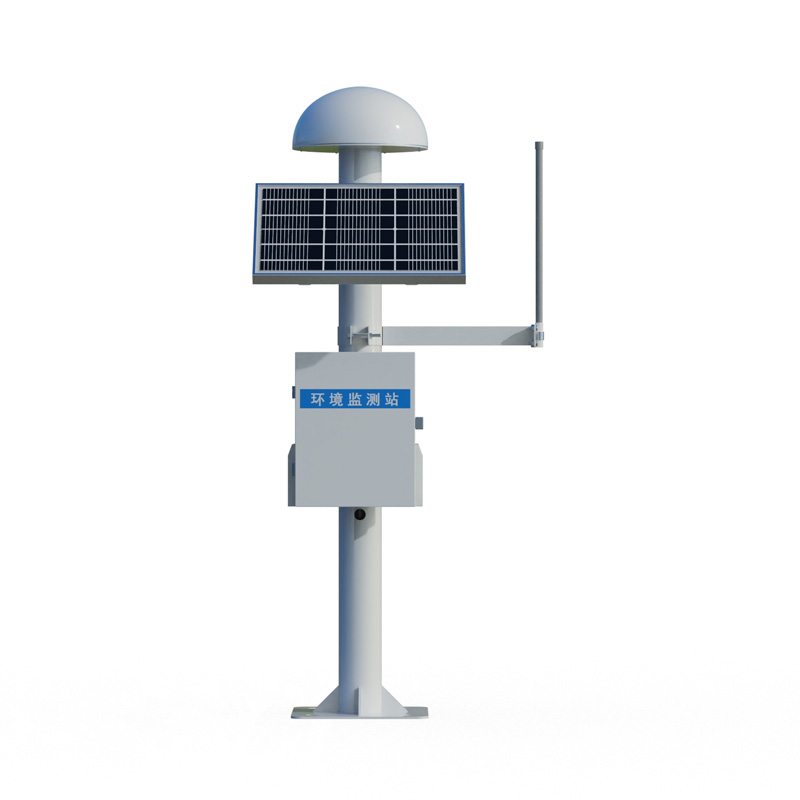
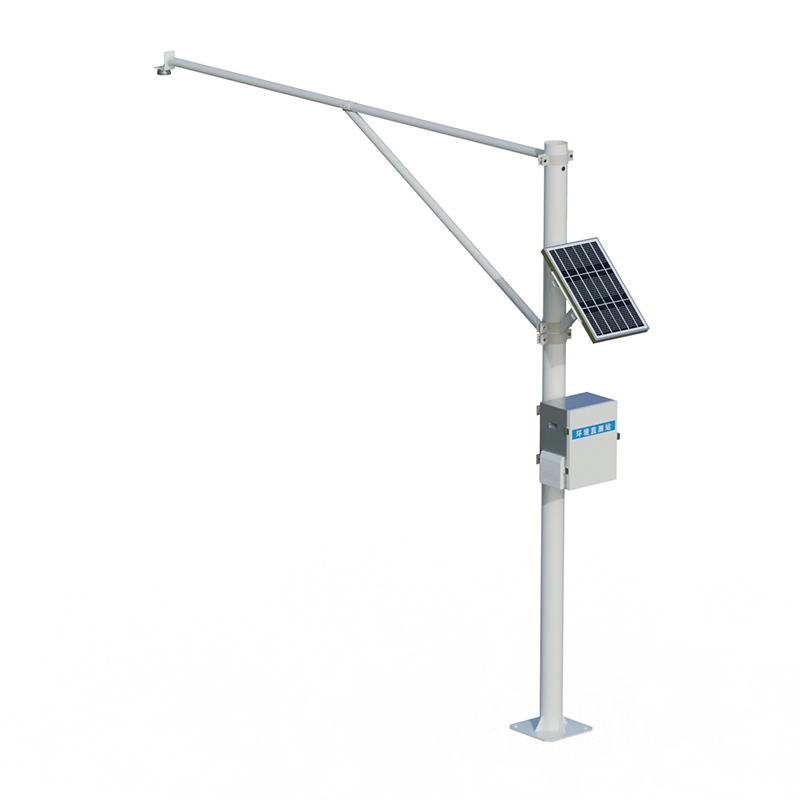
GNSS monitoring station
Model:FT-WY1
Brand:fengtu
 Get a Free Quote
Product details
1.Introduction to GNSS monitoring station
GNSS monitoring station is used for managers to grasp the changes in slope deformation and displacement in real time, and can be continuously monitored for a long time.GNSS monitoring station is a millimeter-level displacement monitoring product implemented using differential RTK technology.It can be widely used in engineering fields such as dam safety monitoring, bridge health detection, landslide warning, etc.This product has high precision, high stability and real-time data transmission capabilities, and can accurately monitor the tiny displacement changes of target objects in various complex environments.GNSS monitoring station is simple to operate, convenient to install, can remotely monitor and data analysis, providing strong guarantees for engineering safety.In addition, its powerful data processing capabilities and compatibility make this product easily integrated into various monitoring systems, realizing data sharing and integration, and providing comprehensive and efficient solutions for engineering safety monitoring.
2.GNSS monitoring station product parameters
Sensor parameters:
1.Sensor power supply: DC10V-15V
2.Sensor power consumption: 0.25W
3.Static accuracy (differential mode): horizontal ± (2.5mm+1ppm), vertical ± (5mm+1ppm)
4.☆Antenna: Choke antenna, magnetic wave absorbing material, effectively reducing multipath effect
5.☆ Communication protocol: Modbus-RTU, supports offline calculation of displacement amount and vertical and horizontal directions of displacement at the device end
6.Support RTCM3 differential data
7.Dimensions: Diameter 360mm Height 163mm
8.Working environment: -40°C~+85°C, 0%RH~95%RH (no condensation)
Monitoring station parameters:
9.Power supply of the station: 30W solar panels, 20AH battery
10.Station power consumption: Sensor + LORA: 0.6W Sensor + LORA + Data upload: 0.96W
11.☆Supports displacement alarm, displacement output, displacement angle output in independent working mode (not relying on cloud platform)
12.Supports data communication and transmission such as 4G, wireless bridge, wifi, and Ethernet
13.☆Support TCP, HTTP, and UDP direct transmission customer platforms for station testing
Collector parameters:
14.☆Support on-site RS485 output ASCII data format
15.☆Support on-site addition of RS485Modbus-RTU environment sensor
16.Supports built-in 4GFPC antenna
Cloud platform parameters:
17.☆Support platform forwarding and support TCP and HTTP
18.☆The cloud platform supports 3D data viewing, and intuitively view the displacement direction and change amount of observation points.
3.Installation of GNSS monitoring station
Installation requirements:
1.There should be no tall buildings around the base station or the measurement station.If it cannot be avoided, it should be kept at least 20 meters away.
2.The distance between the reference station and the measurement station (baseline distance) is recommended to be less than 500 meters, with a maximum of no more than 2KM, and try to choose to install it at the same altitude.If the distance is too large, the accuracy will be reduced.
3.Try to be visible between the reference station and the measurement station.If it is not fully visible, avoid obstruction of high walls, buildings, etc.
4.Priority is given to ensuring that the satellite antenna is the highest point within 20 meters.
5.The installation base should be firm to avoid degradation of accuracy caused by wind.
6.For specific installation matters, you can also contact the company's after-sales video guidance.
Note: GNSS displacement monitoring is a high-precision displacement monitoring technology achieved by positioning satellites such as Beidou and GPS.Its monitoring accuracy strongly depends on the relative relationship between the reference station and the monitoring station and the electromagnetic environment.Excessive baseline distance will seriously affect the monitoring accuracy and even the data is invalid (for example, for baseline distances exceeding 2KM or even 10KM, the possible displacement accuracy due to the influence of the electromagnetic environment and terrain will be reduced to the 10 cm level, which is invalid for displacement monitoring).Therefore, in order to ensure measurement accuracy, the recommended baseline distance is within 500 meters.
This paper addresses:https://www.fengtusz.com/GNSS-sensor/GNSS-monitoring-station.html
- Previous Article :GNSS Receivers
- Next Article:no more
Related article
-
4G - Empowered Soil Temperature and Moisture Meter
2025-04-03 -
Seismic Aftershock Monitoring System FT-YZ2: Features and Applications in Disaster Prevention
2025-05-08 -
Groundwater Monitoring Application Scope and Measurement Performance
2025-12-26 -
Advantages of field weather observatories
2024-02-21 -
Mine Hydrological Monitoring System Real-time Monitoring of Water Levels in Groundwater Wells, Mine Shafts, and Geothermal Wells
2026-03-19 -
Radar Flow Rate Flow Level Rainfall Monitoring Stations
2024-03-28 -
FT-YZ2 Earthquake Aftershock Monitor: Enabling Timely Warning for Post-Earthquake Safety
2025-09-18 -
Lightweight & Stable: The Remote Controlled Lifebuoy Advantage
2025-09-16