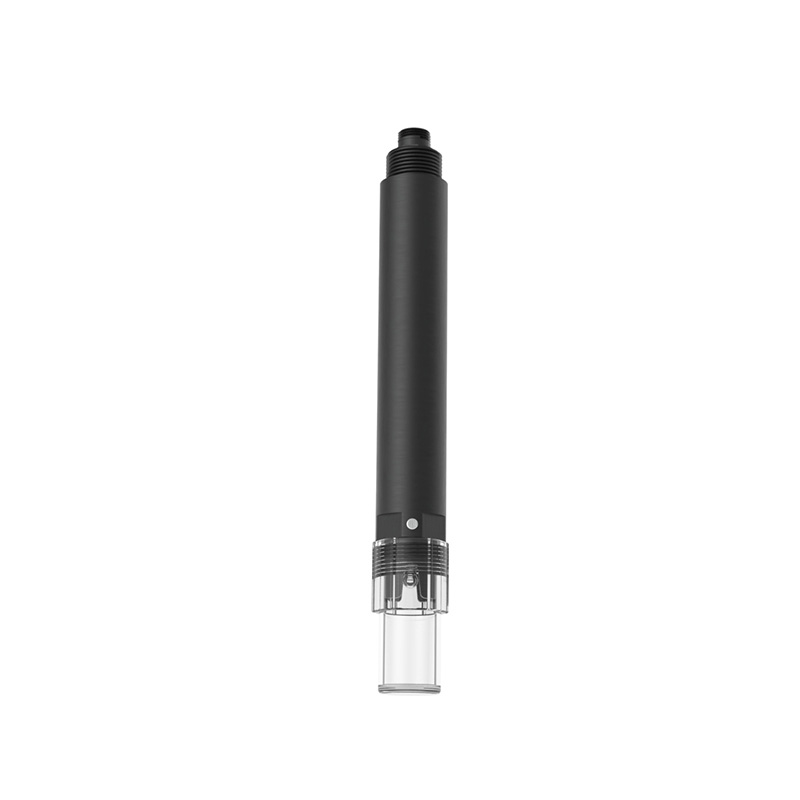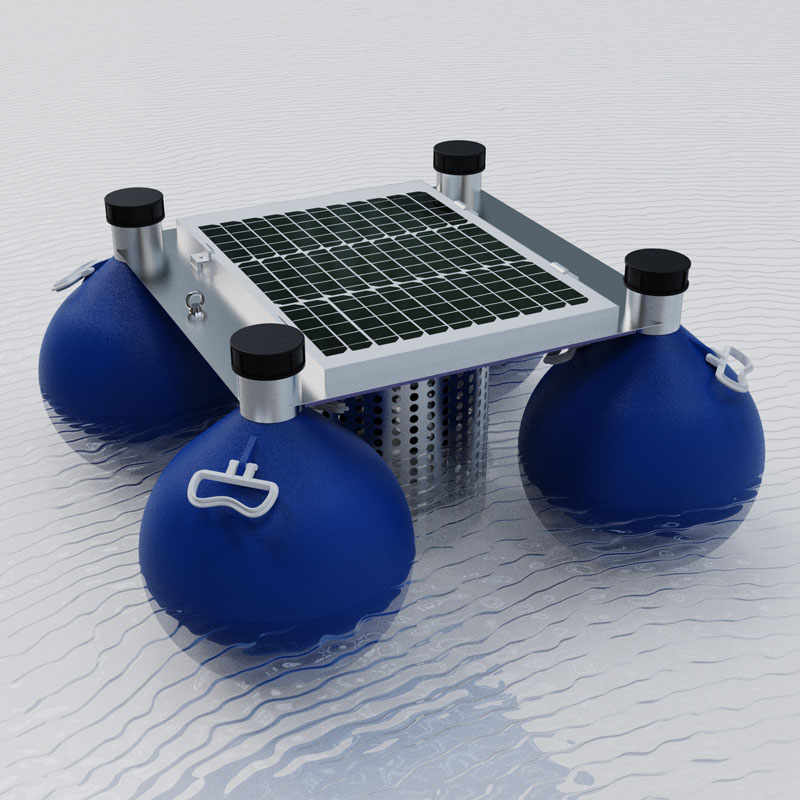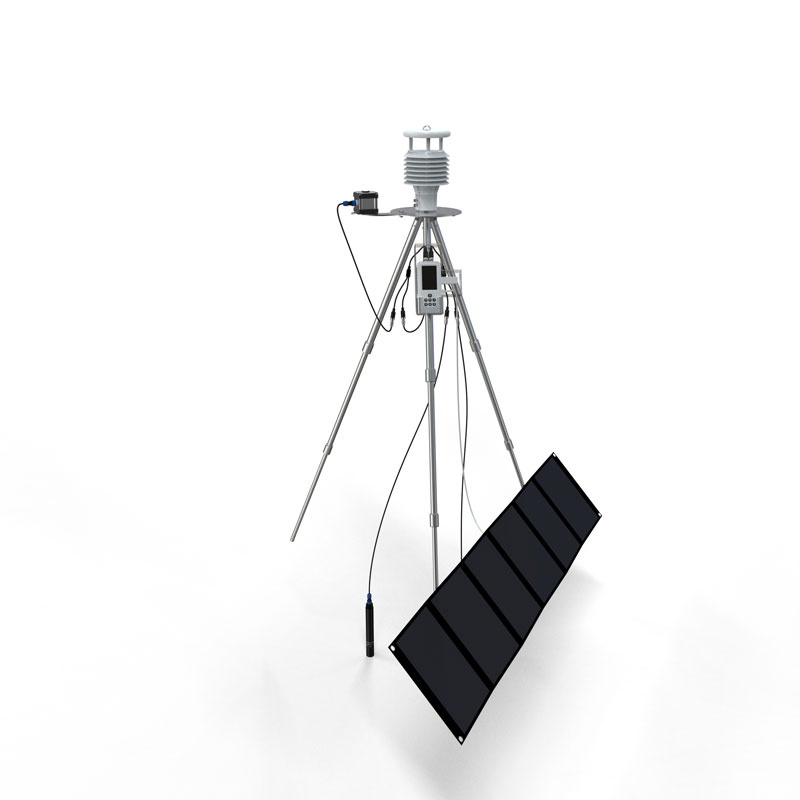
Portable Fluorescence Dissolved Oxygen Analyzer Employs the principle of fluorescence lifetime measurement, offering a measurement range of 0 to 20 mg/L, an accuracy of ±2%, and a resolution of 0.01 mg/L. Featuring a built-in rechargeable lithium battery, it is ideally suited for applications in aquaculture, wastewater treatment, environmental monitoring, scientific research laboratories, and field environments.
Portable Fluorescence Dissolved Oxygen Analyzer is a water quality analysis instrument based on the principle of fluorescence quenching, designed for the rapid, on-site determination of dissolved oxygen concentration and saturation levels in water bodies. This instrument completely eliminates the need for the electrolytes and oxygen-permeable membranes required by traditional membrane electrode methods; it requires virtually no routine maintenance and does not consume oxygen from the water sample during measurement.
Regarding its measurement principle, Portable Fluorescence Dissolved Oxygen Analyzer utilizes fluorescence lifetime technology. The sensor surface is coated with a special fluorescent substance; when blue light emitted by the instrument illuminates this substance, it becomes excited and emits red light. When dissolved oxygen molecules in the water come into contact with the fluorescent substance, the oxygen molecules quench—or absorb—a portion of the fluorescence energy, resulting in a decay in both the intensity and lifetime of the fluorescence. The higher the concentration of dissolved oxygen in the water, the stronger the quenching effect, and consequently, the weaker the fluorescence signal. By measuring the changes in fluorescence intensity or lifetime, the instrument can accurately calculate the corresponding dissolved oxygen concentration. This entire process is a physical reaction; the sensor itself does not participate in any chemical reactions.
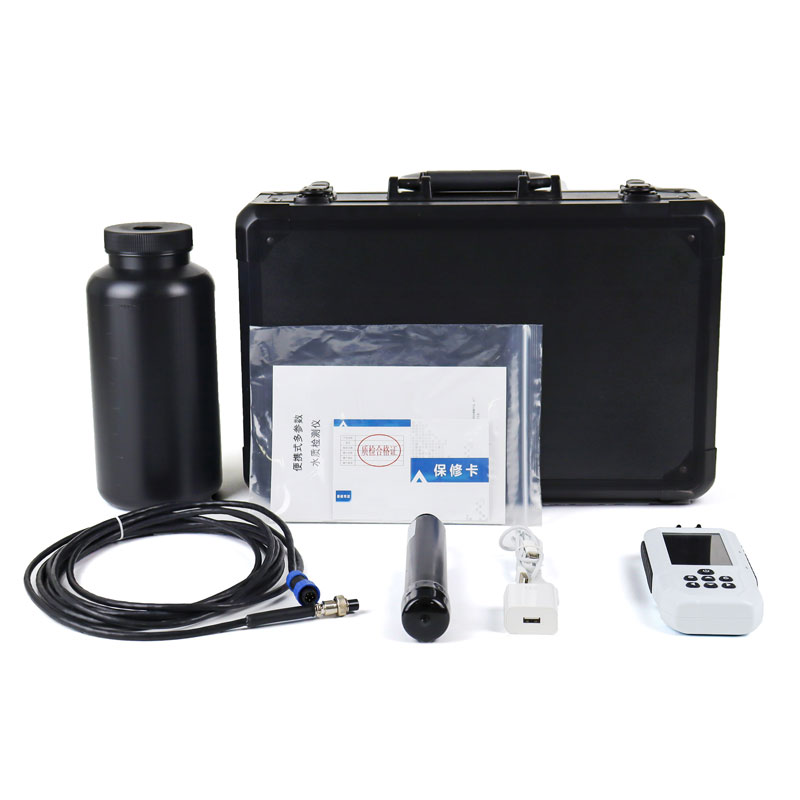
Portable Fluorescence Dissolved Oxygen Analyzer offers numerous advantages in terms of operation and maintenance. It requires no polarization time—measurements can begin immediately upon powering on the device. It eliminates the need to replace membranes or electrolytes, making it essentially maintenance-free; furthermore, following factory calibration, it typically requires no further calibration for up to one year. Measurements do not result in oxygen consumption and are independent of flow rate or agitation requirements. The device features built-in NTC temperature compensation and remains unaffected by water color, turbidity, or the presence of chemical substances such as hydrogen sulfide. Equipped with a high-capacity rechargeable lithium battery and rated with an IP67 protection level, the unit is lightweight and portable, enabling users to perform water quality testing conveniently—whether in the field or in the laboratory—at any time.
In terms of technical specifications, the dissolved oxygen measurement range spans from 0 to 20 mg/L, with a resolution of 0.01 mg/L and a measurement accuracy of ±2%. The response time is less than 30 seconds, and the device supports automatic temperature compensation. Certain models feature a built-in data storage function capable of recording at least 500 data sets, which can then be exported via a USB interface.
The Portable Fluorescence Dissolved Oxygen Analyzer is widely applied across various fields of water quality monitoring. In aquaculture, it is utilized for the dynamic regulation of dissolved oxygen in ponds and industrial recirculating aquaculture systems, enabling the timely detection of hypoxia risks and the implementation of oxygenation measures. In wastewater treatment, it facilitates the real-time monitoring of dissolved oxygen levels in aerobic and anoxic tanks, providing data-driven insights for optimizing aeration control and reducing energy consumption. In environmental monitoring, it is employed to assess the ecological health of natural water bodies, such as rivers, lakes, and surface waters. In scientific research laboratories, it serves as a tool for precise analysis and field measurements. Furthermore, in field environments, it enables rapid, on-site detection of dissolved oxygen in water bodies without the need to carry maintenance supplies such as spare membranes or electrolytes.
This paper addresses:https://www.fengtusz.com/technical/966.html