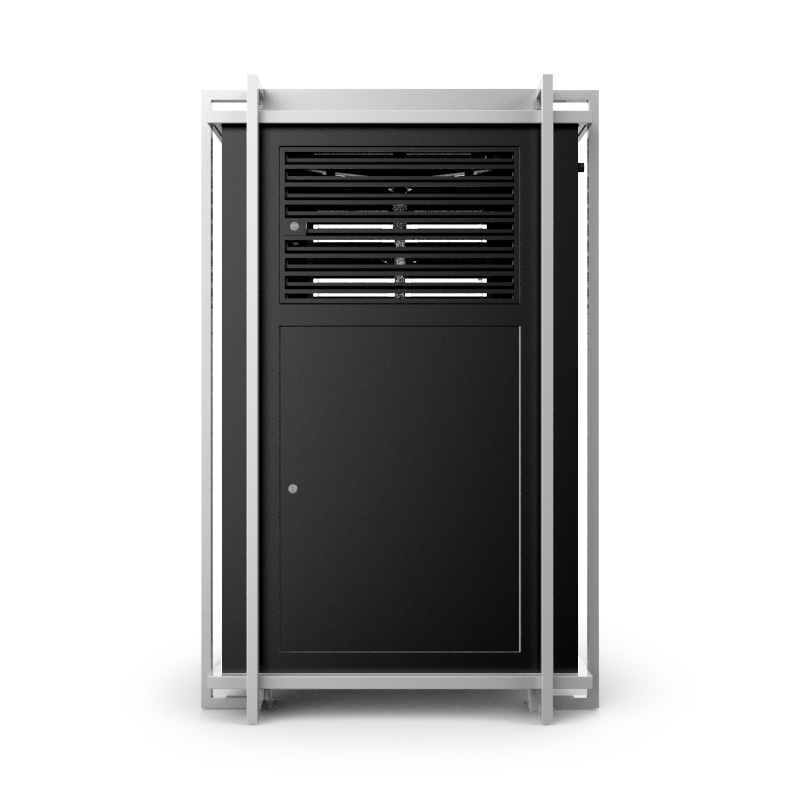
The Real-time Locust Monitoring and Early Warning Station collects locust-related information using a combination of light and pheromone lures. It features automated imaging and AI-driven identification capabilities, enabling the calculation of population density and developmental stage characteristics. This data is transmitted in real-time to a central monitoring and early warning center to support locust control and prevention efforts.
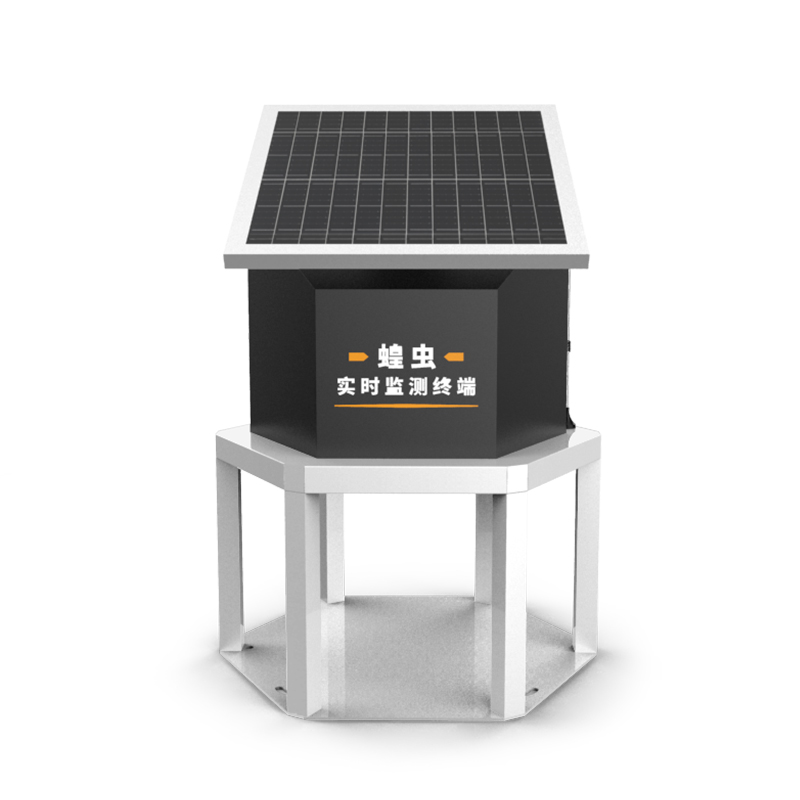
The Real-time Locust Monitoring and Early Warning Station is an intelligent system that integrates light-luring, pheromone-luring, machine vision, IoT, and big data analysis technologies. It is primarily designed for deployment in areas prone to locust breeding. By utilizing light and pheromone lures, the device collects, analyzes, and calculates data regarding locust population density, developmental stages, and other relevant metrics. It features programmable timing functions, automated photography, and automated identification capabilities—specifically trained to recognize common locust species found in forest and grassland environments—thereby enabling the comprehensive collection and analysis of grassland locust data at fixed monitoring sites, with real-time data transmission back to the central monitoring and early warning center.
From a technical perspective, the device employs a dual-spectrum light-luring system (alternating between yellow light [580–620 nm] and red light [640–680 nm] at scheduled intervals) combined with species-specific pheromones. This approach ensures the precise attraction of target locust species while minimizing interference from non-target insects. The device is equipped with a built-in 20-megapixel high-definition camera capable of capturing clear images of locusts in both stationary and active states. Utilizing advanced AI algorithms, the system automatically identifies locust species, developmental stages, and population density with an error rate of less than 5%. Powered by solar panels and lithium-ion batteries, the device consumes no more than 10 watts in standby mode and boasts a designed service life of over 10 years. Its robust, rain-proof design ensures continued, reliable operation even during rainy weather conditions.
Regarding data transmission and early warning capabilities, the device transmits monitoring data in real-time to an agricultural big data platform via 3G, 4G, or 5G wireless networks, facilitating the generation of models for locust migration paths and outbreak trends. The system supports a three-tier early warning mechanism: whenever the locust population density exceeds a predefined threshold, risk alerts are automatically pushed to users via a dedicated mobile app or SMS, accompanied by precise recommendations for control and prevention measures. Users can remotely monitor real-time data and receive alerts via either a mobile application or a web-based client interface.
This device has demonstrated significant effectiveness in practical field applications. The Tianjin Agricultural Development Service Center has collaborated with the Shandong Academy of Agricultural Sciences to develop automated monitoring equipment. By employing light and pheromone trapping methods, this system conducts 24-hour surveillance of locust populations in the field; integrated with automated imaging, identification, and remote transmission capabilities, it enables the real-time collection of data and information. Meanwhile, the Alxa League in Inner Mongolia has deployed multiple remote early-warning and monitoring systems across key afforestation and grassland development zones. Equipped with automated monitoring and alert devices for locusts and rodent pests, and leveraging Internet of Things (IoT) transmission technologies, these systems facilitate the real-time tracking of pest dynamics, thereby establishing a preliminary remote monitoring and early-warning network for forest and grassland pests in critical regions.
Through the application of intelligent monitoring technologies, these real-time locust monitoring and early-warning stations address the inherent limitations of traditional manual patrols—specifically their low efficiency and limited coverage area. By providing real-time data support and a precise basis for decision-making, these stations play a vital role in the prevention and control of locust outbreaks, offering significant practical value for both grassland ecological conservation and agricultural production safety.
This paper addresses:https://www.fengtusz.com/technical/969.html