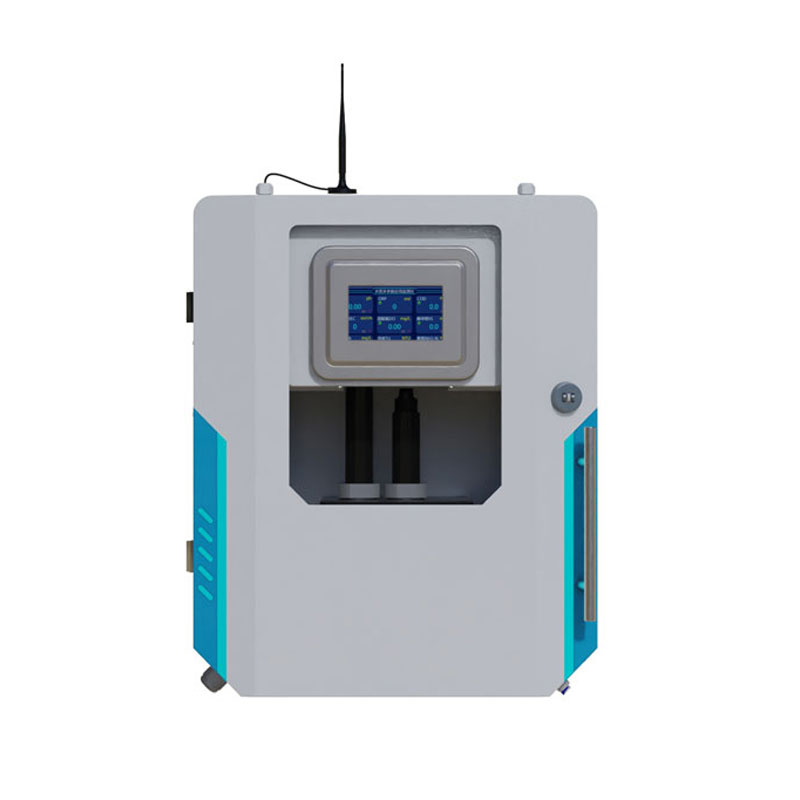
The multi-parameter water quality analyzer employs a combination of electrode and light scattering methods to simultaneously measure five core indicators: residual chlorine, pH, temperature, turbidity, and conductivity. Its modular design allows for on-demand expansion of measurement parameters, making it suitable for 24-hour continuous online monitoring in waterworks, secondary water supply networks, drinking water systems, and swimming pools.
The multi-parameter water quality analyzer is an online analytical device developed to meet the water quality monitoring needs of water supply systems. In waterworks, secondary water supply pump stations, and drinking water systems, residual chlorine, pH, turbidity, conductivity, and temperature are key indicators for assessing water quality safety. The multi-parameter water quality analyzer integrates the detection functions of these parameters into a single device, eliminating the need for multiple single-parameter instruments and significantly reducing equipment space requirements and installation/commissioning workload. The device features an integrated cabinet design; during on-site installation, only the inlet and outlet water pipes and power supply need to be connected for continuous operation. The built-in pretreatment module stabilizes and filters water samples, eliminating interference from pipeline pressure fluctuations and ensuring the reliability of online monitoring data.
Regarding the multi-parameter detection technology of the water quality analyzer, each of the five core indicators employs a specific measurement principle. Residual chlorine detection typically uses the electrode method or the DPD colorimetric method. The electrode method, based on the constant potential measurement principle, offers fast response. A specific potential is applied to the electrode surface to induce an electrochemical reaction in residual chlorine, and the generated current signal is linearly related to the residual chlorine concentration. The DPD colorimetric method uses a photometric detection principle. Residual chlorine in the water sample reacts with the DPD reagent to form a red compound, and the concentration is determined by colorimetric analysis. Both methods have a measurement range of 0 to 5.00 mg/L and an accuracy of ±5% of the reading. pH measurement uses the electrochemical glass electrode method, calculating the pH value based on the potential difference between the measuring electrode and the reference electrode, with a range of 0 to 14 and an accuracy of ±0.1 pH. Temperature is measured using a platinum resistance or NTC thermistor sensor, covering a range of 0 to 85℃ with an accuracy of ±0.1℃. Turbidity detection employs either the 90° scattering light method or 360°×90° scattering light detection technology. When near-infrared light emitted from the light source illuminates the water sample, suspended particles generate scattered light. The intensity of the scattered light is directly proportional to the turbidity. The turbidity measurement range is 0 to 1000 NTU, with an accuracy of ±1%. Conductivity is measured using a two-electrode or four-electrode contact electrode method. The conductivity value is calculated by measuring the conductivity of the water sample between the electrodes, with a range of 0 to 10000 uS/cm and an accuracy of ±1.5%.
In terms of application areas, the water quality analyzer covers the entire monitoring chain from water source to end-user. In water plant effluent pipelines, the equipment continuously monitors parameters such as residual chlorine, turbidity, and pH 24 hours a day to ensure stable compliance of the effluent quality. In secondary water supply pump stations, the equipment monitors the water quality of the water tank in real time, promptly detecting water quality deterioration caused by untimely tank cleaning or aging pipelines. Multi-parameter water quality analyzers deployed in water supply networks can monitor water quality online at the network's end points. Alarms are triggered upon detecting sudden changes in turbidity or a decrease in residual chlorine, alerting maintenance personnel to inspect the pipelines. Equipment installed at the user's end provides final verification of the effluent quality for direct drinking water systems. Furthermore, swimming pool water treatment systems require continuous monitoring and automatic adjustment of residual chlorine and pH. Multi-parameter water quality analyzers can be linked to dosing pumps, automatically activating chlorination equipment when the residual chlorine concentration falls below a set threshold, achieving closed-loop water quality control. Online water quality monitoring in large-scale water purification equipment and centralized water supply stations are also typical application scenarios for this equipment. Multi-parameter water quality analyzers support multi-level alarms and remote data transmission, allowing data from various monitoring points to be aggregated to a management platform, guiding adjustments to disinfectant dosage and effectively preventing public health risks caused by pipeline corrosion or water source pollution.
This paper addresses:https://www.fengtusz.com/company/999.html