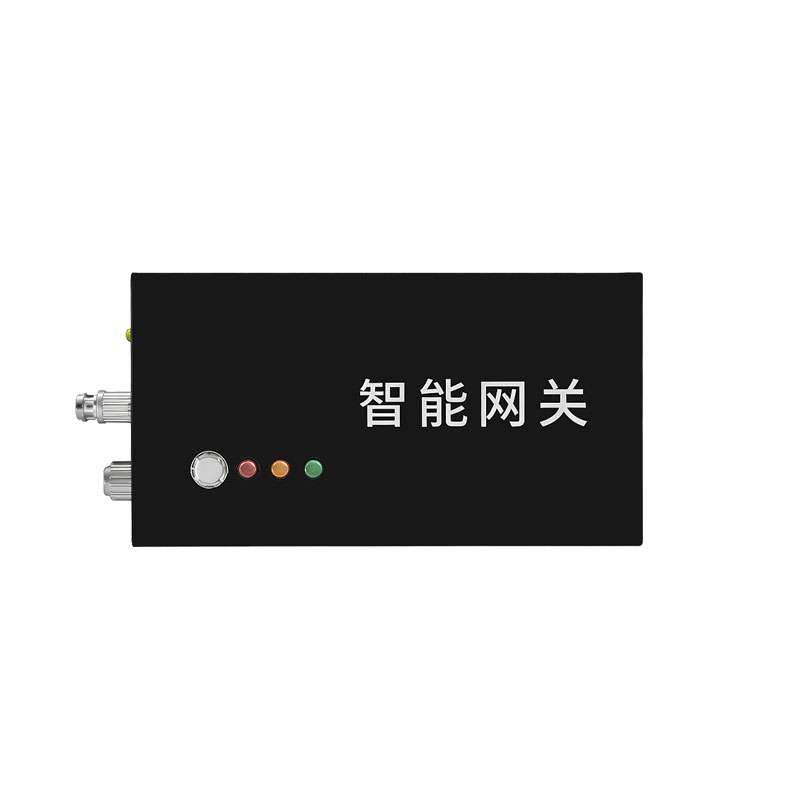
The Smart Termite Monitoring Gateway serves as the core data relay device within a termite monitoring system. Employing a multi-protocol design, it supports various networking methods, including LoRa, 4G, and NB-IoT. A single gateway can accommodate connections from over 300 monitoring devices; featuring an IP67 protection rating, it operates stably in environments ranging from -40°C to 85°C, making it suitable for deployment in scenarios such as water conservancy projects, historical buildings and cultural heritage sites, and dams.
The Smart Termite Monitoring Gateway is a core component of the automated termite monitoring and early warning system, responsible for the aggregation, relay transmission, and protocol conversion of monitoring data. A complete smart termite monitoring system comprises several key elements: front-end monitoring devices, relay gateways, a cloud-based management platform, and client-side interfaces such as mobile mini-programs and PC-based management software. Termite monitoring devices deployed in the field utilize technologies—such as electromagnetic induction, vibration sensing, or image recognition—to detect termite feeding activity, subsequently transmitting these signals wirelessly to the gateway. Upon demodulating and decoding the incoming LoRa RF signals, the gateway transmits the data to a cloud server via 4G, Ethernet, or NB-IoT networks, enabling administrators to view and analyze the information in real-time via the management platform.
In terms of technical specifications—exemplified by the BYWG model—the Smart Termite Monitoring Gateway features an average power consumption of 1.2W. It supports flexible power options, operating on DC 15–25V solar power or DC 10–25V adapter power. The device maintains an operating temperature range of -40°C to 85°C and an operating humidity range of 10% to 90%; with its IP67 protection rating, it remains fully functional even under harsh environmental conditions, such as heavy rain or dust storms. The gateway measures 685mm × 430mm × 447mm and weighs less than 2kg. Its communication protocols support multiple modes, including LoRa and WLAN; specifically, the LoRa module operates at a frequency of 470–510 MHz with a receiving sensitivity of -130 dBm. A single gateway can support the simultaneous connection of over 300 monitoring devices and features a "one-to-one" wireless wake-up function designed to prevent data crosstalk.
The core advantage of the Smart Termite Monitoring Gateway lies in its multi-protocol extensibility. The gateway features a comprehensive array of expansion interfaces, allowing for the replacement or addition of specific modules to meet the networking requirements of diverse application scenarios—for instance, by adding a relay module to extend the monitoring range in areas with weak signal coverage, such as reservoir dams. Its housing is constructed from high-strength, corrosion-resistant materials, while its internal structure incorporates waterproofing, dust-proofing, and moisture-proofing mechanisms, enabling it to withstand exposure to sunlight, rain, and chemical erosion. This device is widely deployed across various fields, including dam safety monitoring in water conservancy projects, the preservation of cultural heritage sites and ancient architecture, urban landscaping and termite control, and agricultural production. By facilitating remote, real-time monitoring, it significantly reduces the labor intensity and time costs associated with manual inspections, thereby providing a more scientific, efficient, and stable technical foundation for termite prevention and control.
This paper addresses:https://www.fengtusz.com/technical/972.html